

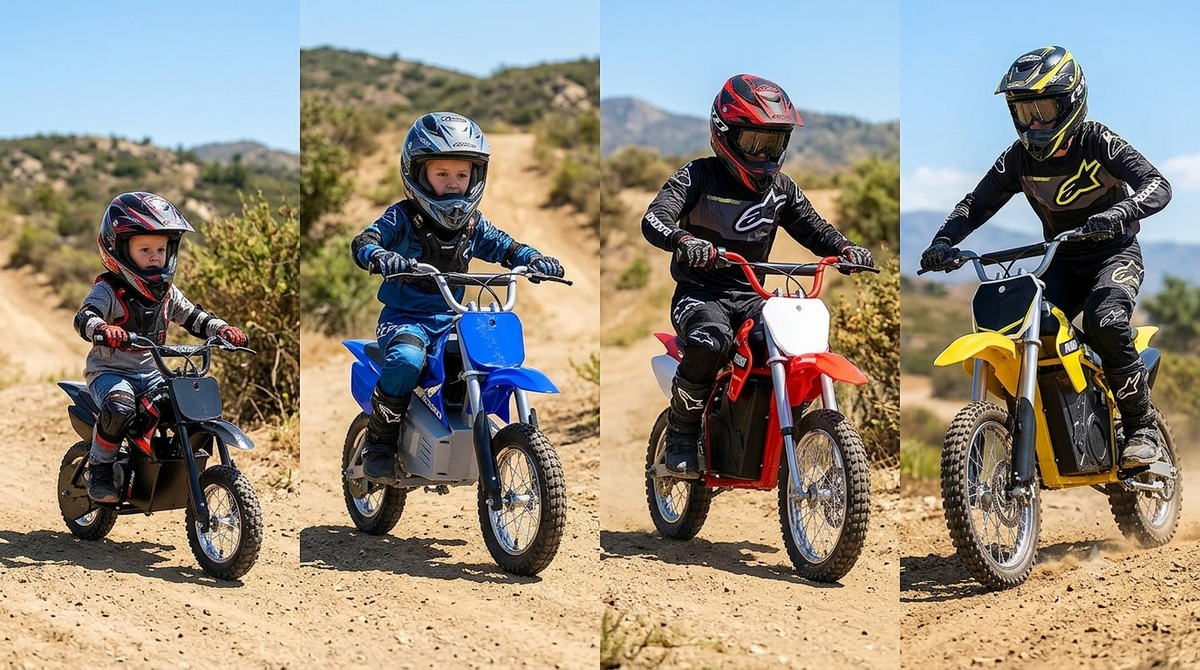
Razor's Dirt Rocket lineup runs from the small 8 mph MX125 to the larger 17 mph MX650. The names look like a simple ladder, but choosing correctly requires more than moving to the next number. Rider size, balance, reach, terrain and experience matter more than age alone.
Official US lineup
| Model | Razor age guidance | Maximum speed | Recommended maximum rider weight |
|---|---|---|---|
| MX125 | 5+ | 8 mph | 110 lb |
| MX350 | 8+ | 14 mph | 140 lb |
| MX500 | 14+ | 15 mph | 175 lb |
| MX650 | 16+ | 17 mph | 220 lb |
These are manufacturer guidelines, not proof that every child of the listed age is ready. Specifications and regional guidance can change.
MX125: compact entry point
The MX125 has the lowest maximum speed and suits short, supervised practice on appropriate flat surfaces. It still requires balance and reliable braking. Do not expect the suspension, clearance or climbing ability of a full trail motorcycle.
MX350: faster recreational step
The MX350 reaches a claimed 14 mph and uses pneumatic knobby tires with a chain-driven rear wheel. It feels more like a mini dirt bike than the MX125, but remains a recreational electric ride. Choose it only after starts, steering and stops are consistent.
MX500: a chassis jump, not merely 1 mph more
The MX500 is larger and carries an older age recommendation. Its size and mass change low-speed handling even though its listed maximum speed is only slightly above the MX350. Check reach and strength, not just speed.
MX650: the largest Dirt Rocket
The MX650's 17 mph speed and 220-pound recommended maximum rider weight place it far beyond a small child's first powered bike. The intended rider needs the physical size and judgment to control the platform.
Maximum rider weight is not a fit recommendation
- Can the rider stabilize the bike?
- Can the brake be reached from a normal grip?
- Are elbows relaxed rather than locked?
- Can knees move freely during turns?
- Can the child push and steer with power off?
Battery and ride time
Razor Dirt Rockets commonly use sealed lead-acid packs. Real ride time changes with weight, hills, grass, temperature, tire pressure and repeated full-throttle starts. Recharge and store the exact model according to its manual; lead-acid batteries lose capacity when neglected in a discharged state.
Grass and hills
Grass increases rolling resistance and hills increase electrical demand. The small models are best treated as flat-ground recreational bikes. A larger motor does not turn an MX500 or MX650 into a competition motocross motorcycle.
When to compare alternatives
A child may need longer ride time, lighter lithium batteries, better suspension, stronger hill performance or more precise speed control. Smaller riders can compare the MX125 with the Ecoleap K1. Confident riders in the MX350 conversation can compare the Ecoleap K2.
Best model by situation
| Situation | Investigate |
|---|---|
| Small rider who fits a compact bike | MX125 |
| Experienced child ready for up to 14 mph | MX350 |
| Older/larger rider needing a bigger chassis | MX500 |
| Mature rider fitting Razor's largest platform | MX650 |
| Needs lithium battery and staged off-road growth | Compare purpose-built alternatives |
Bottom line
Start with the smallest model the rider can confidently use today, not the largest they might fit next year. See our Razor age guide and MX125 vs MX350 comparison.


Share:
How Long Will Kids Ride Their First Dirt Bike?
First Family Trail Ride With Kids: Planning Guide