


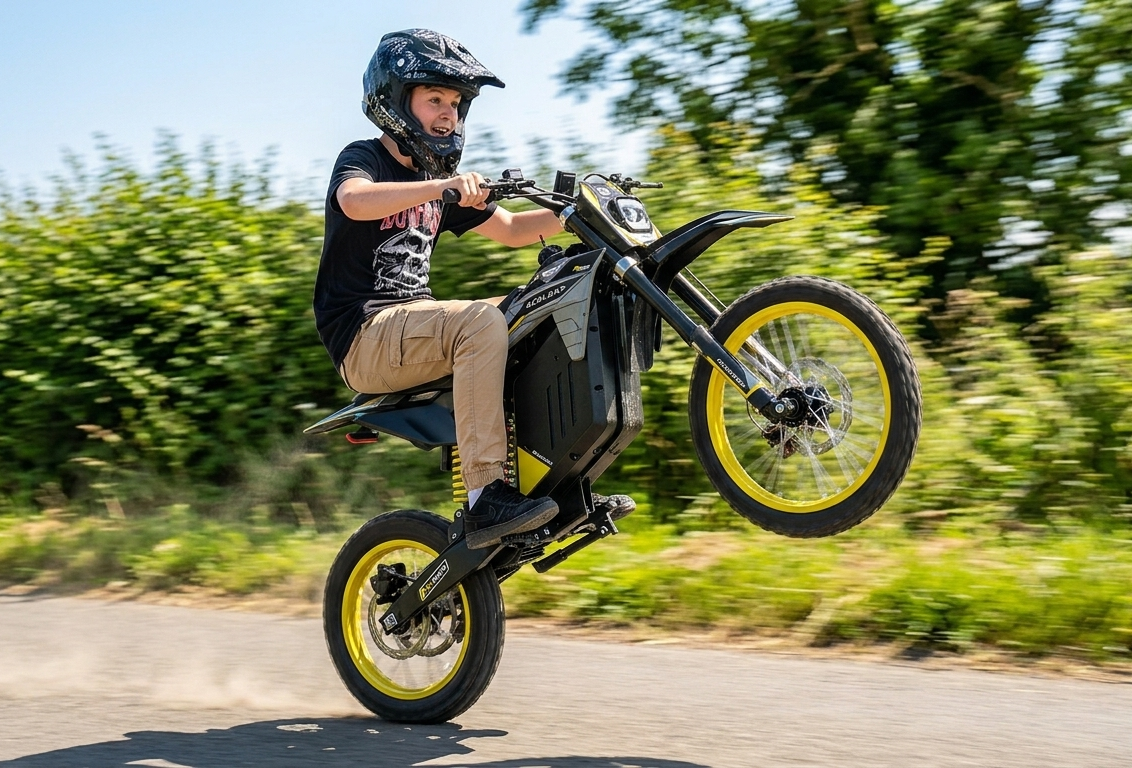
Teen Electric Dirt Bike Brakes Explained: Which Stopping System Actually Keeps Young Riders Safe?
1. Mechanical Disc Brakes
How they work: A metal cable connects the brake lever to a caliper at the wheel. When you squeeze, the caliper clamps two brake pads against a steel disc (rotor) mounted to the hub.
What makes them good for teens:
- Simple, predictable lever feel
- Easy to self-service — cable replacement is a 10-minute job
- Cheap to maintain; pads and cables cost a few dollars
- Works consistently across most riding conditions
Where they fall short:
- Cable stretch over time reduces stopping power
- In wet or muddy conditions, cables can drag or stiffen
- Less modulation compared to hydraulic systems — harder to "feel" the stopping point precisely
Best for: Entry-level riders and younger teens (8–13) where simplicity and ease of parental maintenance matter more than peak performance.
2. Hydraulic Disc Brakes
How they work: Instead of a cable, fluid-filled lines transfer lever pressure to the caliper. Hydraulic pressure is self-equalizing, which means the caliper automatically adjusts as pads wear down.
What makes them good for teens:
- Significantly more stopping power with less hand effort
- Excellent modulation — riders can feel exactly how much grip they have
- Self-adjusting; consistent feel throughout the life of the pads
- Superior performance in wet, muddy, or dusty conditions
Where they fall short:
- More expensive to service (requires bleeding the lines)
- If a line is punctured or a seal fails, brake function can degrade suddenly
- Less suitable for young riders who don't yet have refined brake feel
Best for: Intermediate-to-advanced teen riders (13+) on more aggressive terrain. The EcoLeap Conqueror X runs hydraulic disc brakes for exactly this reason — the power-to-rider ratio demands it.
3. Regenerative Braking (Regen)
How they work: This is unique to electric bikes. When the rider releases the throttle or applies a light brake, the electric motor switches to generator mode — it creates electrical resistance that slows the wheel while simultaneously feeding energy back into the battery.
What makes it useful:
- Extends battery range by recovering energy on downhills and deceleration
- Creates smooth, progressive deceleration — great for trail riding and controlled speed reduction
- Reduces wear on physical brake pads
- Adds a natural "engine braking" feel familiar to dirt bike riders
Important distinction: Regenerative braking is not a standalone stopping system. It creates drag and slows the bike, but it cannot bring the bike to a full stop on its own. It always works alongside physical disc or drum brakes.
Best for: All electric dirt bikes benefit from regen. Look for adjustable regen levels — some bikes let riders tune how aggressive the regenerative drag feels.
4. Drum Brakes
How they work: Brake shoes press outward against the inside of a drum enclosure mounted to the wheel hub. Cable-actuated, fully enclosed.
What makes them appealing:
- Fully sealed from mud, water, and debris — excellent durability in rough conditions
- Consistent performance over a long service life
- Very low maintenance
Where they fall short:
- Significantly less stopping power than disc brakes
- Prone to heat fade during sustained use (long downhills, repeated hard stops)
- Heavier than disc systems
- Cannot dissipate heat effectively — a problem when a teen rider is repeatedly braking hard
Best for: Low-speed beginner bikes (under 15 mph) where simplicity and durability are the priority. Not recommended for anything with real speed capability.
5. Foot Brakes / Rear Pedal Brake
How they work: A foot-actuated lever on the right side of the bike operates the rear brake only — almost always a disc or drum system. This mirrors the controls on a full-size motorcycle.
Why it matters for teens:
- Teaches proper two-brake technique early — a critical skill for any future rider
- Rear-only braking prevents front wheel lockup (a major cause of crashes)
- Allows hands to stay on the throttle during controlled deceleration
- Builds muscle memory for the transition to adult motorcycles or motocross bikes
Best for: Any youth bike designed to teach real riding technique. The Conqueror X includes a rear foot brake for exactly this reason — it's part of how the bike teaches.

Side-by-Side Comparison
| Braking System | Stopping Power | Wet Performance | Maintenance | Teen Suitability |
|---|---|---|---|---|
| Mechanical Disc | ★★★☆☆ | ★★★☆☆ | Easy | Best for beginners |
| Hydraulic Disc | ★★★★★ | ★★★★★ | Moderate | Best for intermediate+ |
| Regenerative | ★★☆☆☆ | ★★★★★ | None | All riders (supplemental) |
| Drum Brake | ★★☆☆☆ | ★★★★☆ | Low | Low-speed only |
| Foot Brake | ★★★☆☆ | ★★★☆☆ | Low | All riders (rear only) |
How Professional Youth Bikes Combine Systems
Here's what most people miss: good youth dirt bikes don't pick one brake system — they layer them.
A well-designed electric dirt bike for teens will typically combine:
Front: Hydraulic disc brake (lever-operated) → Maximum stopping power where 70% of braking force happens
Rear: Mechanical disc or drum + foot brake lever → Controlled rear deceleration, prevents flip-over
Drivetrain: Regenerative braking → Energy recovery + smooth speed reduction during normal riding
This three-system approach gives the rider graduated control. In an emergency, the hydraulic front disc does the heavy work. During trail riding, the foot brake modulates rear traction. During relaxed cruising, regenerative braking handles subtle speed control without touching the levers at all.
What Parents Should Actually Check
When evaluating any youth electric dirt bike, ask these specific questions:
1. What size is the front rotor? Larger rotors (160mm+) dissipate heat better and provide stronger stopping. Undersized rotors on a powerful bike are a safety compromise.
2. Is there ABS or traction control? Some higher-end youth models now include basic ABS. It prevents wheel lockup during hard braking — especially valuable for teen riders still learning threshold braking.
3. Can the brake lever reach be adjusted? Teen hands are smaller than adult hands. Brake levers that can't be adjusted to reach short fingers mean reduced control. This detail matters more than most parents realize.
4. Does the bike have independent front and rear brakes? Linked braking (where one lever operates both wheels) sounds convenient but removes fine control. Independent front/rear teaches proper technique.
5. How hard is it to bleed the hydraulic lines? If the bike has hydraulic brakes, you'll eventually need to service them. Know this before you buy.
The Bottom Line
The best braking system for a teen electric dirt bike is a combination: hydraulic disc at the front for maximum stopping force, a rear foot brake for control and technique, and regenerative braking for efficiency and smooth deceleration in between.
Mechanical disc brakes are a solid, low-maintenance choice for younger or less experienced riders. Drum brakes are acceptable only on very low-speed bikes. Regenerative braking is a bonus you should expect on any electric model — but never the only stopping system.
Most importantly: brakes only work if they're maintained. Check brake fluid levels, pad thickness, and cable tension before every ride. A powerful motor demands equally powerful brakes. That's not optional — it's the whole point.
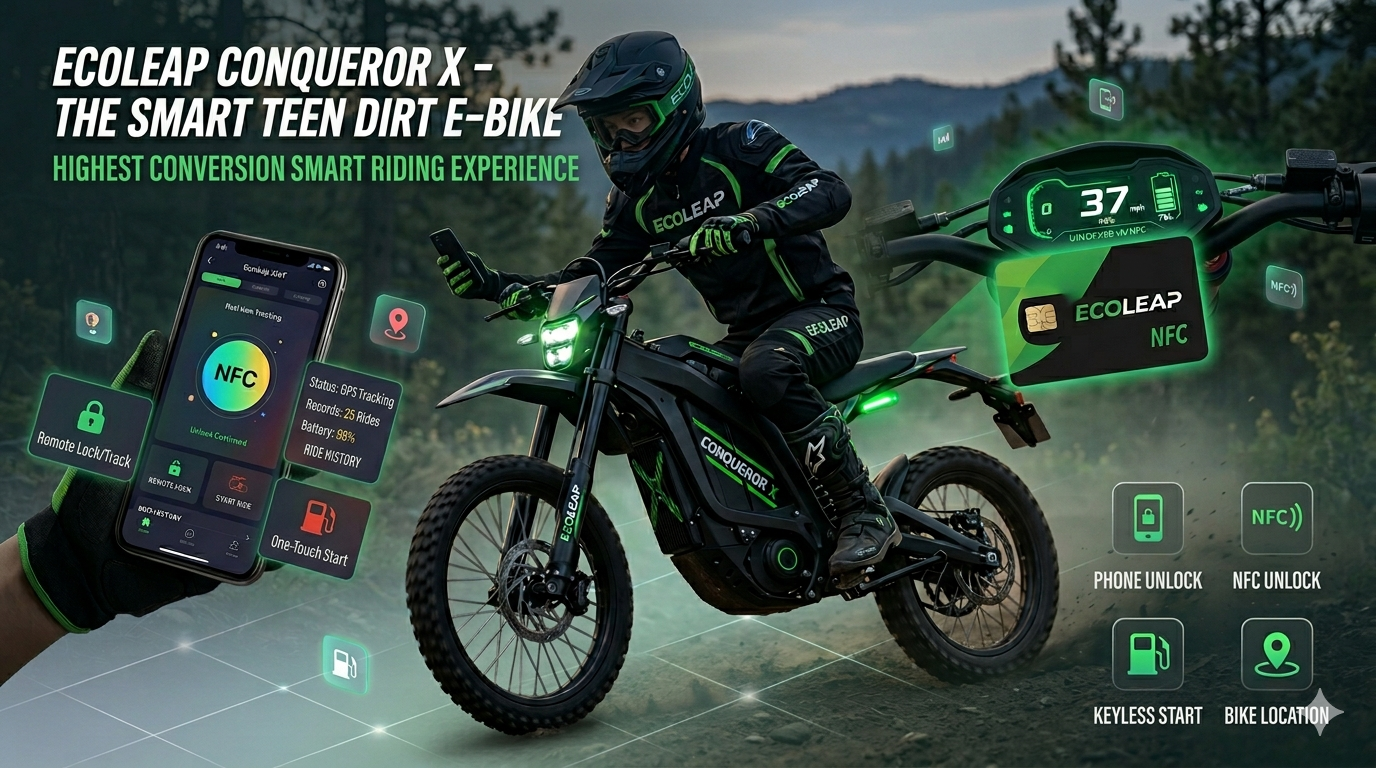
The EcoLeap Conqueror X features dual hydraulic disc brakes, adjustable regenerative braking, and a rear foot brake — engineered specifically for teen riders who are ready to ride with serious control.
Questions about braking setup or bike fit? Reach out to our team at EcoLeapBike.com.
Share:
Razor Electric Dirt Bikes vs. Ecoleap: Is It Time to Upgrade Your Child’s Ride?
US State-by-State Riding Law Reference Guide for Dirt E-Bikes (2026)