

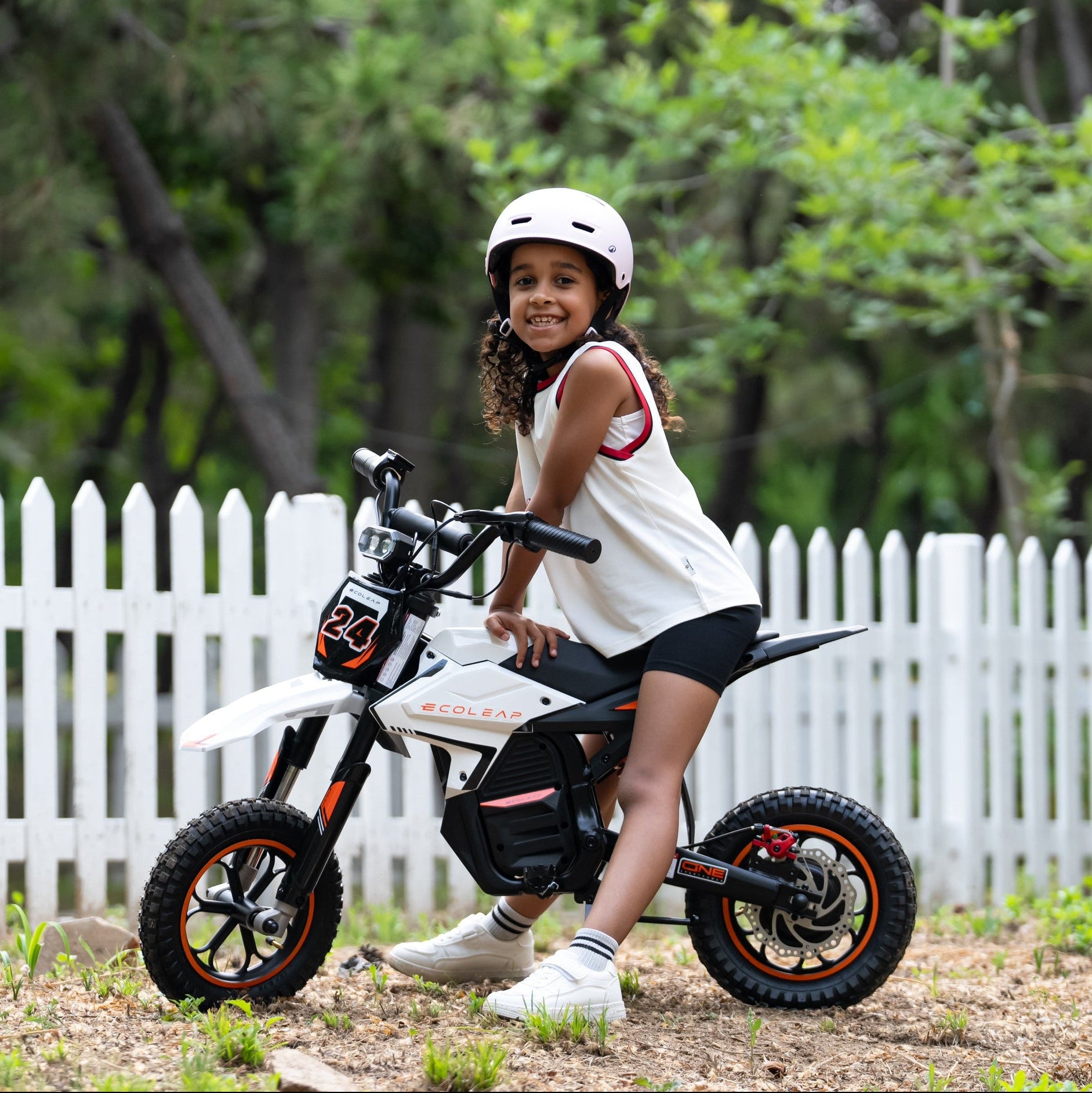
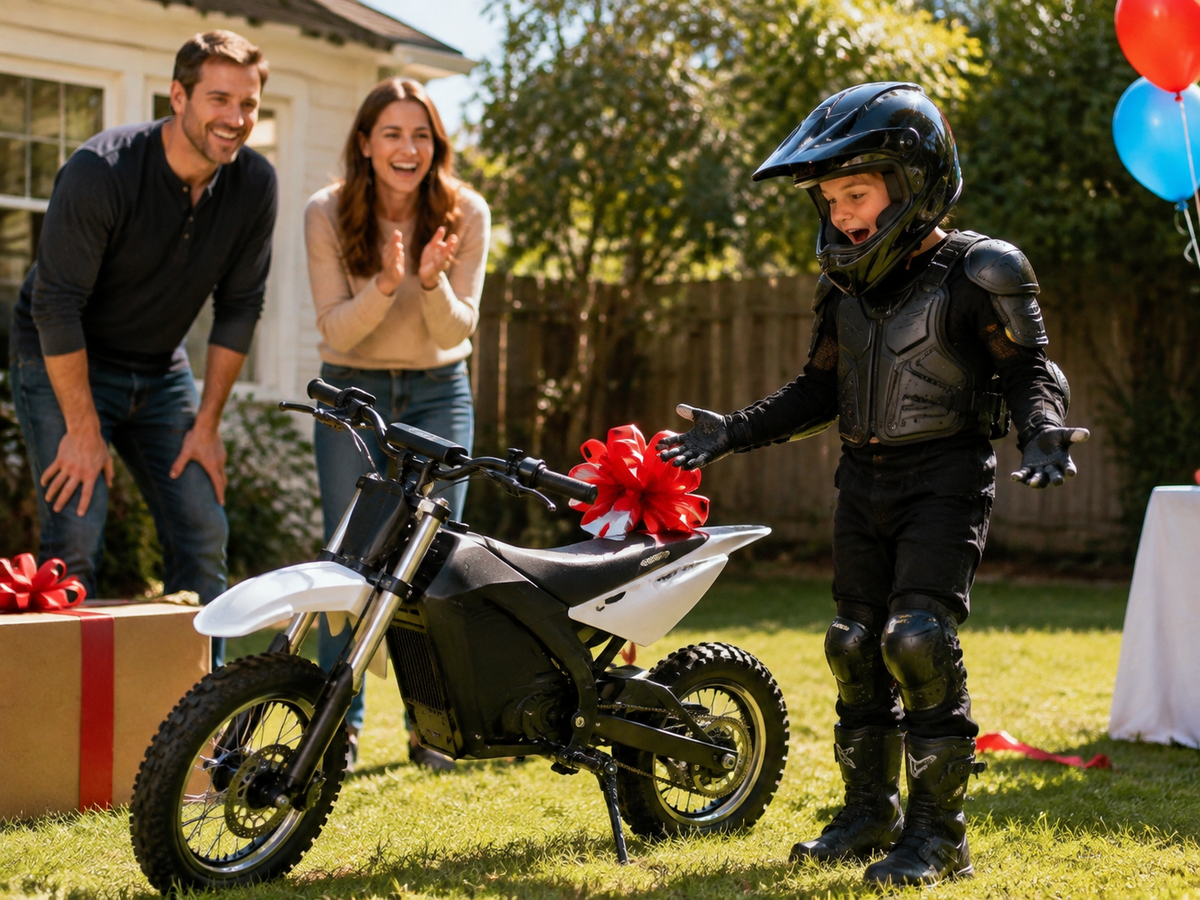
An electric dirt bike can create an unforgettable birthday reaction, but it is not a gift that should be chosen only for the reveal. Unlike a toy that can be used anywhere, a youth dirt bike requires correct fit, protective equipment, a permitted riding area, adult supervision, charging and maintenance. Children between six and ten vary enormously in height, coordination and judgment. The best birthday gift is a complete riding plan that matches the individual child, not simply the most powerful bike within budget.
Start with readiness, not age
A child who rides a bicycle confidently, stops on command and understands basic risk may be ready for a low-speed electric dirt bike. Another child of the same age may need more time on a pedal or balance bike. Watch how the child reacts to surprise: do they freeze, panic and grip harder, or can they release the throttle and brake deliberately? Emotional readiness matters because excitement on a birthday can make a child rush past instructions.
Measure without ruining the surprise
Parents can measure inseam by framing it as a clothing, bicycle or sports-gear check. Compare that measurement with published seat height, while remembering that seat width and suspension sag affect how the bike feels. Review vehicle weight and brake reach. If possible, have the child sit on a similarly sized bike before the birthday. Do not buy an oversized machine mainly to preserve the surprise or extend future use.
Make the gift a complete package
Budget for a certified helmet, goggles or eye protection, gloves, knee and elbow protection, long riding clothes and over-the-ankle boots. Add a simple stand, approved tire gauge and any manufacturer-recommended tools. The child should open the gear before the bike or at the same time, reinforcing that protection is part of riding rather than an optional rule added afterward.
Plan the first ride before the party
A crowded birthday gathering is rarely the best environment for a first powered ride. Guests, noise and pressure to perform can distract the child and supervising adult. Consider presenting the bike at the party but scheduling the first lesson for a calm day on flat private property. If riding occurs immediately, create a clear exclusion zone and limit participation to the child and the designated coach.
Set expectations in advance
Explain that adults decide when, where and in which speed mode the bike is used. Charging is handled or supervised by an adult, protective gear is mandatory and the session ends when instructions are ignored. These rules do not diminish the gift; they protect future access to it. Children often accept boundaries more easily when they are stated before the first ride rather than during a conflict.
Choose features that support learning
Look for a low suitable speed setting, predictable throttle, brakes the child can reach, pneumatic off-road tires and dimensions that allow confident stops. Front and rear suspension can help on rough grass and packed trails. A 36V mid-power bike with staged modes may offer room to grow, while a smaller 24V model can be better for a cautious or physically smaller rider. The feature list must serve the child’s current stage.
Fit and readiness come before the category
A product label cannot determine whether a machine fits a particular child. Measure inseam in riding boots, check reach to the handlebar and both brake controls, and confirm that the rider can support the bike during a normal stop. Compare vehicle weight as carefully as seat height. A low seat can help, but a machine that is too heavy to recover from a lean may still undermine confidence. Age ranges should be treated as broad starting points only.
Readiness also includes behavior. The child should stop immediately when an adult signals, scan ahead rather than stare at the front wheel, and accept a decision to end the ride. Consistent judgment in a low mode is more important than occasional success at higher speed. Parents should choose the machine that supports present learning, not one selected mainly around the hope that the child will grow into it.
Inspect the complete ownership package
Look beyond the purchase price. Confirm warranty coverage, replacement parts, battery or engine service needs, shipping or assembly requirements and access to qualified help. Inspect tires, brakes, throttle, steering, controls, frame, suspension, final drive and all safety guards. For a used machine, documentation and condition matter more than cosmetic shine. For a new machine, dealer preparation or careful assembly still needs verification before the first ride.
Plan where the bike will be ridden and stored. Off-road access rules vary, and neither an electric nor a small gas dirt bike is automatically street legal. A family needs a permitted practice area, transport method, secure dry storage, protective equipment and time for maintenance. A bike that cannot be used legally or conveniently may deliver less value than a simpler model that fits the family’s real routine.
Use a staged first-ride plan
Start on flat, open private property with a properly fitted certified helmet, eye protection, gloves, long sleeves, long pants, knee and elbow protection and over-the-ankle boots. Practice the controls with the machine off. Then complete smooth starts, stops at a marker and wide turns at the lowest suitable performance setting. Introduce only one new variable—more speed, rougher terrain or a slope—at a time.
Keep sessions short and end before fatigue changes posture or decision-making. After riding, ask what felt easy, difficult and surprising. Inspect the machine again for loose fasteners, fluid leaks, drivetrain changes or damage. A simple riding log helps parents separate a one-time mistake from a repeated fit, control or maintenance problem.
Frequently asked questions
What age is best for an electric dirt bike gift?
There is no single best age. Fit, balance skill, instruction-following, riding environment and speed control matter more than the birthday number.
Should the bike be assembled before the birthday?
Yes. Complete assembly and inspection well before the reveal so missing parts, charging time or adjustments do not create an unsafe rushed setup.
Can siblings share one bike?
They can if each rider fits, uses an appropriate setting and receives separate supervision. Do not assume one configuration suits both children.
Is a gift card a better surprise?
For uncertain fit, letting the child participate in selection can be safer and still exciting. Parents can pair a helmet or riding jersey with the shopping plan.
How to preserve the surprise without compromising fit
Parents can create the emotional reveal around the riding experience rather than hiding every decision. Give the child protective gear, a miniature bike model or a printed invitation to choose the final color after fit has been confirmed. If the actual bike is already selected, assemble, charge and inspect it several days early. Keep all packaging until fit and condition are verified, and understand the seller’s return policy before the birthday.
A quiet first lesson can be planned for the morning after the party. This separates excitement from instruction and gives the child time to understand the rules. Limit spectators and do not allow friends or siblings to take turns until each rider has been fitted and briefed separately.
Budget beyond the bike itself
Include helmet and body protection, boots, replacement wear parts, charging setup, transport and riding-area fees in the gift budget. If those essentials make the selected bike unaffordable, choose a smaller supported model rather than reducing protective equipment. A complete, manageable package creates a better birthday experience than a powerful bike that cannot be used safely or regularly.
Create a birthday riding agreement
A simple family agreement can cover where the bike may be used, which adult must be present, required gear, charging responsibility and the conditions for changing speed modes. Keep the language positive and specific. The child can help inspect tire pressure and protective equipment while the adult handles charging and mechanical work. Making care part of ownership gives the gift a longer life and turns riding into a shared family activity rather than a one-day surprise.
Final recommendation
An electric dirt bike becomes a good birthday gift when the family is giving more than a machine: correct fit, gear, riding access, supervision and patient instruction. If those pieces are ready, the gift can introduce years of outdoor skill-building. If they are not, delaying the purchase or choosing a smaller first step is the responsible decision.
Families building a step-by-step training path can review the Ecoleap K2 kids electric dirt bike and our guide to deciding when a child is ready to move up to a PW50.
Safety note: Follow the manufacturer’s manual and local rules. Children should ride only in permitted off-road areas with complete protective gear and responsible adult supervision.


Share:
24V vs. 36V Kids Electric Dirt Bike: Which Battery System Is Better?
Can a Kids Electric Dirt Bike Handle Hills?