

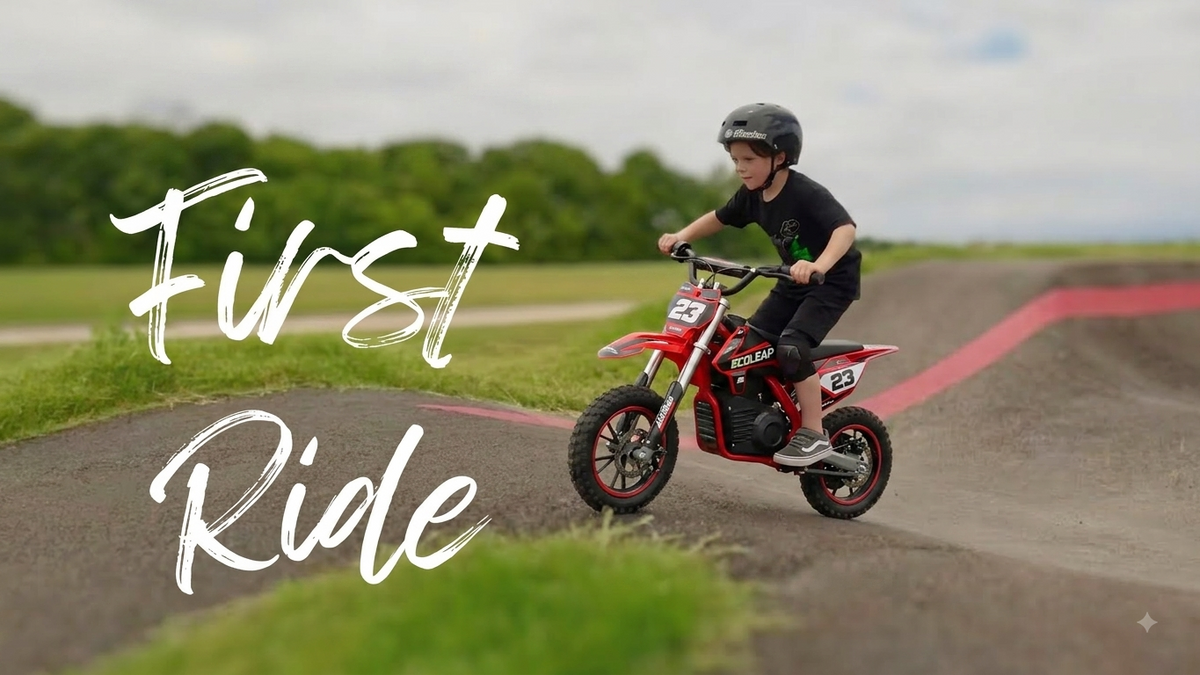
The Ecoleap K2 and Husqvarna EE 2 can both appear on a parent’s shortlist, but they solve different problems. K2 is a value-focused pre-PW50 trainer for family practice and light off-road skill building. The Husqvarna EE 2 is a premium youth electric motorcycle developed closer to a motorsport ecosystem.
Start with purpose
| Question | K2 direction | Husqvarna EE 2 direction |
|---|---|---|
| Main goal | Build fundamentals before PW50/KTM/Husky | Premium first motorcycle or structured track progression |
| Training approach | 10/15/20 mph modes on one family-oriented platform | Use the exact model’s adjustable settings and manufacturer guidance |
| Terrain | Grass, gravel, hard dirt and light trails | Purpose-built riding areas appropriate to the model |
| Ownership priority | Lower purchase barrier and simpler chainless family use | Premium chassis, dealer ecosystem and race-oriented lineage |
Why K2 makes sense as the middle bike
K2 gives a confident bicycle or powered-balance-bike rider foot pegs, suspension, wide 12 × 2.75-inch tires and a rear mechanical disc brake. The brushless hub motor is rated at 400W sustained and 850W peak. A 36V 7.8Ah lithium battery and chainless drive keep routine family use straightforward.
Its most important feature is the 10 mph beginner mode. Parents can keep the child at one level while teaching starts, stop boxes, figure eights and mild slopes, then move to 15 mph after the behavior—not simply the birthday—changes.
Why a family may choose EE 2
A parent may prefer a premium platform, dealer relationship, motorsport brand ecosystem or a bike built closer to their future track pathway. In the FB discussion shared by Ecoleap, several owners praised the confidence their children gained on the EE 2 and mentioned weight, brakes and suspension as reasons. Those are useful owner perspectives, but they are not a controlled comparison and should not be treated as universal outcomes.
The price comparison is not enough
A higher price may include different engineering, components, dealer support and brand positioning. A lower price may offer better value for backyard skill building. The right decision is not “Which one has more bike per dollar?” but “Which bike matches the next learning objective and the family’s riding environment?”
Fit and minimum response decide the first ride
Check the current EE 2 specifications and settings with Husqvarna because model-year details can change. For K2, verify that the child can manage a 20.67-inch seat, 41.89 lb bike and 10 mph lowest powered mode. If either machine is too tall, too heavy or too responsive, it is not the correct first bike.
Choose K2 if
- The child has balance skills but needs a pre-PW50 practice stage.
- The family rides primarily on private grass, packed dirt, gravel or light trails.
- Three clearly separated speed modes support the training plan.
- Value and low routine drivetrain maintenance matter.
Choose EE 2 if
- The exact current model fits the child physically and behaviorally.
- The family wants a premium youth motorcycle and dealer/motorsport pathway.
- The riding area and coaching match the bike’s capability.
- The budget includes gear, transport, service and suitable places to ride.
Safety still depends on fit, terrain and supervision
No speed mode or motor type makes a youth dirt bike automatically safe. Use a properly fitted certified full-face helmet, goggles, gloves, long sleeves, long pants, knee and elbow protection and over-the-ankle boots. Ride only on private property or permitted off-road areas, away from traffic, water, drop-offs and bystanders. An adult should inspect the brakes, tires, controls, fasteners and riding area before each session.
Verdict
K2 is the stronger fit when the job is “build skills before PW50, KTM or Husky.” EE 2 is the stronger fit when the family is ready to invest directly in a premium youth motorcycle pathway. Neither choice is correct until the child passes the fit, strength, throttle and braking tests.
Model specifications, prices and recommendations can change. Confirm the current manufacturer product page and owner’s manual before buying. Community comments cited here are individual parent experiences, not controlled product tests.
More detail for parents making this decision
A first dirt bike changes several demands at once: balance, weight, brake reach, throttle judgment, terrain reading and emotional confidence. The following checks turn a broad recommendation into a practical decision for one specific child. Use them before comparing maximum speed or planning how many years a bike might last.
Compare learning objective before specifications
K2 is designed around an accessible middle stage: family practice, real foot-peg posture and three clearly separated speed modes. The EE 2 belongs to a premium youth-motorcycle ecosystem. The correct comparison begins with the next skill and riding environment, then considers components and price. The useful test is repeatability: ask whether the child can perform the skill calmly five or ten times, not whether it happened once in a video. Practice with the motor off first when possible, then use the lowest appropriate setting in a flat, clearly bounded area. If posture becomes tense, braking gets late or the child needs frequent rescue, reduce the task instead of adding speed.
Account for total ownership cost
Purchase price is only one line. Include protective gear, a suitable riding location, transport, replacement wear items, charging equipment, dealer service and possible race or track fees. A premium platform may be worthwhile for a committed pathway, while a training-focused family may prefer lower entry cost. The useful test is repeatability: ask whether the child can perform the skill calmly five or ten times, not whether it happened once in a video. Practice with the motor off first when possible, then use the lowest appropriate setting in a flat, clearly bounded area. If posture becomes tense, braking gets late or the child needs frequent rescue, reduce the task instead of adding speed.
Use settings as a curriculum
A low mode is useful only when paired with specific standards. Keep the rider in one setting until starts are smooth, stop boxes are accurate, turns are completed without foot dabbing and throttle is released automatically when confused. Then add one new demand at a time. The useful test is repeatability: ask whether the child can perform the skill calmly five or ten times, not whether it happened once in a video. Practice with the motor off first when possible, then use the lowest appropriate setting in a flat, clearly bounded area. If posture becomes tense, braking gets late or the child needs frequent rescue, reduce the task instead of adding speed.
Evaluate chassis demands at walking speed
Suspension and performance matter on track, but beginners first meet the bike while mounting, walking, turning tightly and stopping. Test these actions with power off. A premium chassis that overwhelms the child at zero speed cannot deliver its intended benefit. The useful test is repeatability: ask whether the child can perform the skill calmly five or ten times, not whether it happened once in a video. Practice with the motor off first when possible, then use the lowest appropriate setting in a flat, clearly bounded area. If posture becomes tense, braking gets late or the child needs frequent rescue, reduce the task instead of adding speed.
Match the bike to the family’s terrain
K2 is positioned for controlled family practice on grass, hard dirt, gravel and light trails. A family choosing a Husqvarna platform may be planning purpose-built riding areas or a motorsport progression. Buying beyond the terrain available can leave capability unused. The useful test is repeatability: ask whether the child can perform the skill calmly five or ten times, not whether it happened once in a video. Practice with the motor off first when possible, then use the lowest appropriate setting in a flat, clearly bounded area. If posture becomes tense, braking gets late or the child needs frequent rescue, reduce the task instead of adding speed.
Separate brand aspiration from rider readiness
Parents who ride or race may naturally prefer a familiar motorsport brand. That preference is valid, but it should follow physical fit and behavioral control. A child does not become ready because the family has a long-term racing goal. The useful test is repeatability: ask whether the child can perform the skill calmly five or ten times, not whether it happened once in a video. Practice with the motor off first when possible, then use the lowest appropriate setting in a flat, clearly bounded area. If posture becomes tense, braking gets late or the child needs frequent rescue, reduce the task instead of adding speed.
Consider service expectations
Before purchase, ask who will inspect brakes, tires, controls and fasteners, where replacement parts come from and whether local dealer support matters. A family comfortable with routine checks may value simplicity; another may prioritize a dealer relationship and model-specific service. The useful test is repeatability: ask whether the child can perform the skill calmly five or ten times, not whether it happened once in a video. Practice with the motor off first when possible, then use the lowest appropriate setting in a flat, clearly bounded area. If posture becomes tense, braking gets late or the child needs frequent rescue, reduce the task instead of adding speed.
Choose the exit condition for each stage
If K2 is selected, define what would justify moving on: stable highest-mode control, terrain limits, physical growth or entry into organized coaching. If EE 2 is selected, define its initial restrictions and review dates. A written plan prevents birthdays or peer pressure from becoming the upgrade trigger. The useful test is repeatability: ask whether the child can perform the skill calmly five or ten times, not whether it happened once in a video. Practice with the motor off first when possible, then use the lowest appropriate setting in a flat, clearly bounded area. If posture becomes tense, braking gets late or the child needs frequent rescue, reduce the task instead of adding speed.
Frequently asked questions
Is the EE 2 automatically better because it costs more?
No. A higher price can reflect components, engineering, dealer support and brand positioning, but value depends on the family’s objective. A less expensive training platform can be the better tool when the goal is controlled backyard skill building.
Can K2 replace a competition motorcycle?
K2 is positioned as a pre-PW50 training bike for skill development and family off-road use, not as a replacement for a race-focused platform. Families should choose the bike built for their intended environment.
Which child is not ready for either option?
A child who cannot balance independently, reach and operate the brake, manage the bike’s weight or follow a stop command needs a lighter and simpler stage first, regardless of age.
A parent-led decision, not a race
Progress is rarely linear. Growth spurts, a difficult fall, a new surface or a long break can temporarily move a rider backward. Keep the next session short enough to finish with a successful repetition. A smaller step that preserves enthusiasm usually builds skill faster than an impressive upgrade that spends most of its time parked.


Share:
Best Electric Dirt Bike for a 7-Year-Old: Parent Buying Guide
How Long Will Kids Ride Their First Dirt Bike?