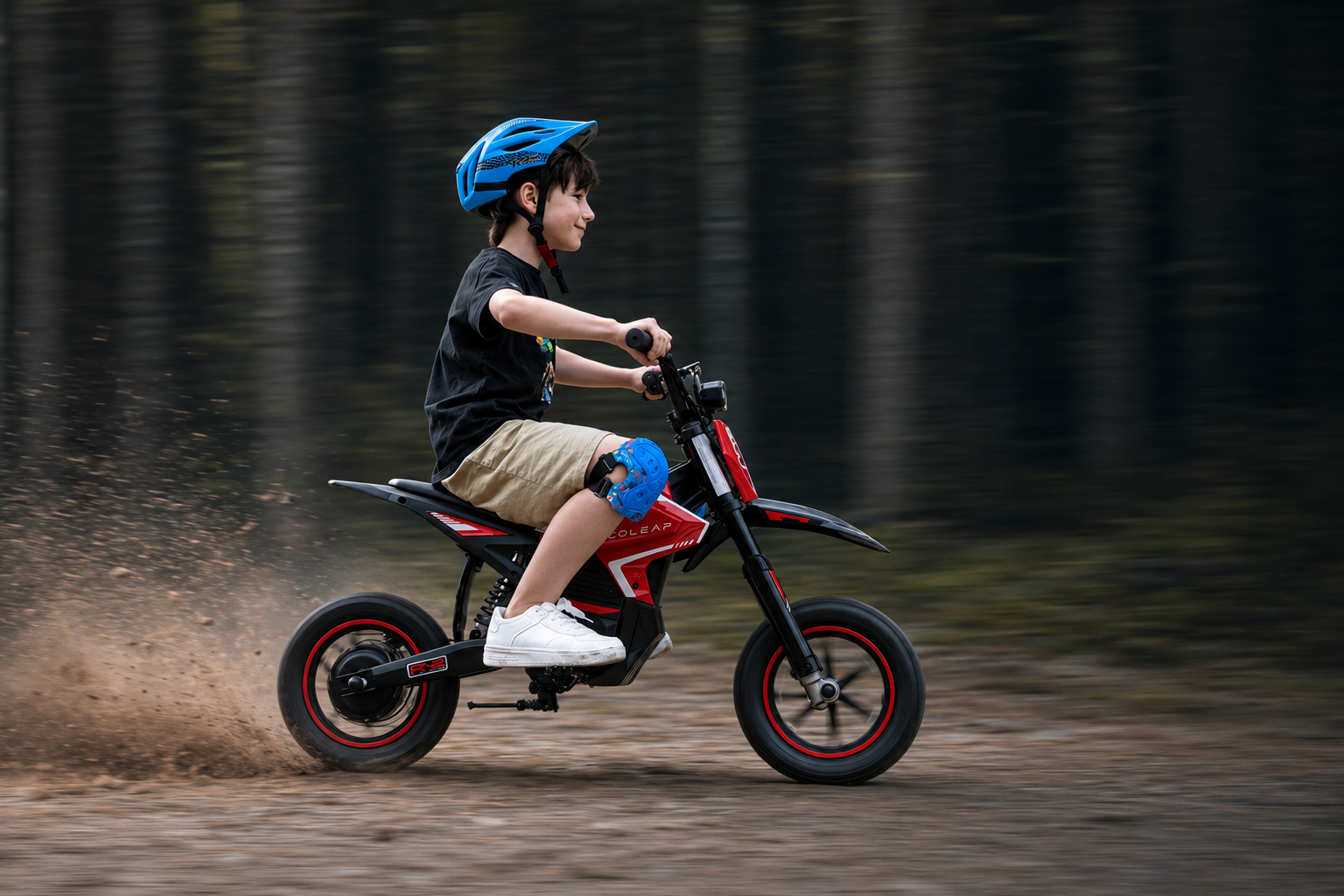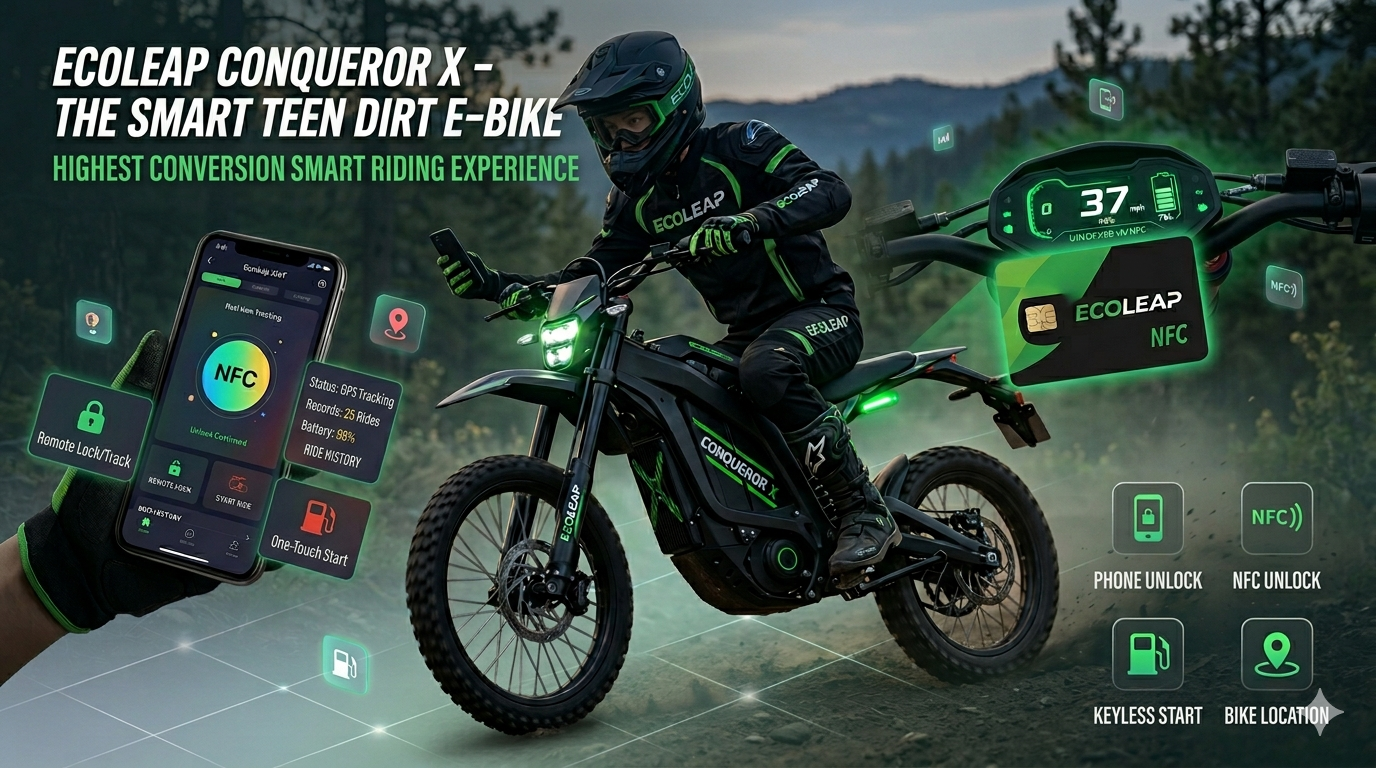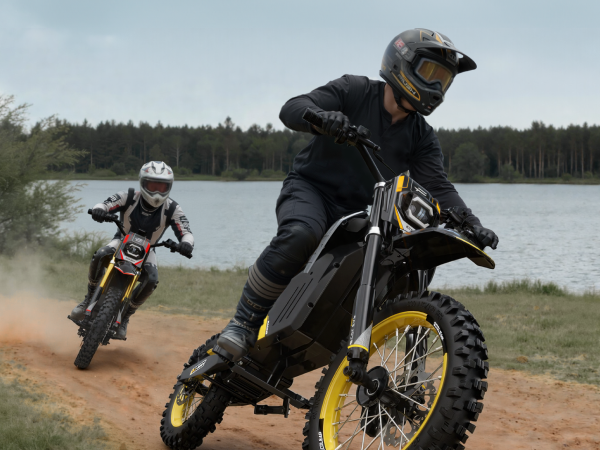
Teen dirt e-bikes now cover a surprisingly wide range of machines. Some are mild trail bikes designed for newer riders, while others deliver motorcycle-like acceleration and speeds that demand real judgment, protective gear, and controlled riding areas. That makes a simple “which one is fastest?” comparison less useful than it appears. The better question is which bike fits the rider’s size, experience, terrain, and level of supervision.
This guide compares six names shoppers frequently encounter: Ecoleap’s Evoltrix MAX-60, Qronge, Tuttio, Aipas, Eskute, and Yozma. The goal is not to declare one universal winner. It is to explain the different priorities behind these bikes and help families identify the right performance class. Product specifications and prices can change, so confirm the current listing before buying.
Quick answer: which teen dirt e-bike fits which rider?
- Evoltrix MAX-60: best suited to experienced teens and adult-sized riders who want a high-output 60V mid-drive platform, long claimed range, full suspension, and hydraulic braking.
- Qronge: a performance-first option for riders comparing high-voltage bikes and prioritizing acceleration and top-speed claims.
- Tuttio: often considered by shoppers who want compact dirt-bike styling and a more approachable value proposition.
- Aipas: attractive to buyers focused on power-per-dollar, although model size and intended rider should be checked carefully.
- Eskute: generally appeals to value-oriented riders who care about practical trail use and battery capacity.
- Yozma: worth considering when rugged styling, suspension, and off-road-oriented construction rank above smart features.
If the rider is new to high-output electric bikes, start by reading our guide to whether a 4,000W electric dirt bike is too much for a beginner teen. A bike’s peak wattage is only one part of the decision; throttle response, weight, fit, brakes, terrain, and rider discipline matter just as much.
Comparison overview
| Brand / model | General platform | Main strength | Best fit | Important caution |
|---|---|---|---|---|
| Ecoleap Evoltrix MAX-60 | 60V, 5500W claimed mid-drive, 14/12-inch tires | High-output performance with hydraulic brakes and full suspension | Experienced teens and adult-sized off-road riders | 50 mph claimed speed is not beginner territory |
| Qronge | High-voltage performance class | Acceleration and speed-focused positioning | Experienced riders comparing raw performance | Verify the exact model, controller and battery specification |
| Tuttio | Compact electric dirt-bike class | Value, manageable dimensions and trail usability | Developing riders who prioritize handling | Different models may vary substantially in power and weight |
| Aipas | Performance/value class | Strong advertised output for the price | Value shoppers with prior riding experience | Confirm intended rider age, dimensions and legal classification |
| Eskute | Practical trail/value class | Battery capacity and everyday usability | Recreational trail riders | Range claims depend heavily on speed, load and terrain |
| Yozma | Rugged off-road class | Moto-inspired suspension and construction | Riders who prioritize rough-terrain capability | Heavier construction can be harder for smaller teens to manage |
This table describes the general buying position of each option rather than treating every advertised number as an identical laboratory result. Peak power, maximum speed, and range may be measured under different conditions. Rider weight, tire pressure, temperature, hills, surface, riding mode, and repeated acceleration can produce very different real-world results.
Ecoleap Evoltrix MAX-60: the high-output all-rounder
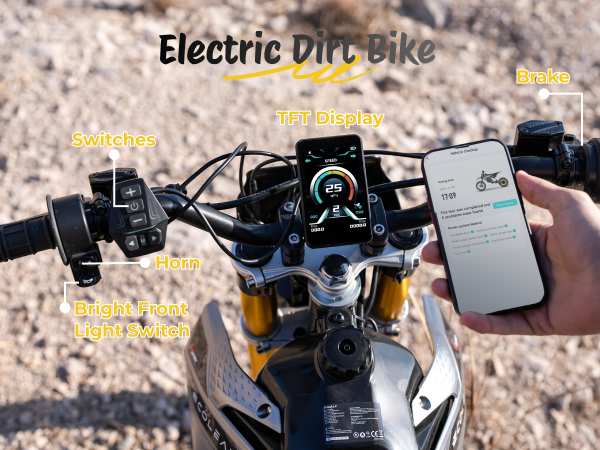
The Evoltrix MAX-60 represents Ecoleap in this comparison as a purpose-built 60V high-output platform. The current store listing places it in a higher performance category with a 60V 27Ah battery, a 5500W claimed mid-drive motor, a 50 mph claimed maximum speed, and up to 60 miles of claimed range. It uses a 14-inch front and 12-inch rear tire combination, three speed settings, full suspension, and hydraulic brakes.
The mid-drive layout is one of its most meaningful differences. By driving through the bike’s central drivetrain rather than placing all propulsion mass in a wheel, a mid-drive system can support more balanced weight distribution and strong climbing response. The tradeoff is that this level of torque requires more deliberate throttle control and greater respect for drivetrain loading. An inexperienced rider who opens the throttle abruptly can be overwhelmed even if the bike physically fits.
The 60V 27Ah battery also gives the MAX-60 a large nominal energy capacity. That supports longer rides, but “up to 60 miles” should be treated as an ideal-condition estimate rather than a guarantee. Soft dirt, steep climbs, high-speed riding, cold weather, frequent stops, and a heavier rider all increase energy use. Families comparing range should focus on the ride they actually plan to do, including a safe reserve for the return trip.
The three speed settings are particularly useful during progression. The lowest setting can reduce the immediate performance available while a rider learns the controls and braking feel. However, a lower mode does not make a heavy, high-output machine equivalent to a beginner bike. Parents should still evaluate whether the rider can place both feet securely, hold the bike upright, turn at walking speed, and stop repeatedly without panic.
Qronge: performance-first positioning
Qronge tends to attract shoppers who begin with voltage, motor output, and maximum-speed numbers. That makes it a natural comparison for the MAX-60, but buyers need to compare exact models rather than brand names alone. Controller tuning, battery discharge capability, gearing, tire size, and total weight can make two similarly advertised bikes feel very different.
A performance-focused Qronge may suit an experienced rider who already understands body position, progressive braking, loose-surface traction, and how to avoid abrupt throttle input. For a first-time rider, the same traits can increase risk without adding practical enjoyment. Ask whether the rider needs more speed or would benefit more from predictable response, good fit, reliable parts access, and additional practice.
Tuttio: compact handling and value
Tuttio is commonly cross-shopped by families seeking a compact electric dirt-bike format without automatically moving to the most extreme performance tier. Depending on the model, its appeal may include manageable geometry, trail-oriented suspension, and aggressive styling at a competitive price.
For lighter teens, weight and seat height may matter more than peak wattage. A bike that can be maneuvered confidently at low speed is usually more useful than a faster model that feels top-heavy. Check the current model’s curb weight, seat height, wheel sizes, brake type, replacement-part availability, and maximum rider load. These details help predict whether the rider can handle tight turns, recover from a lean, and move the bike when the motor is off.
Aipas: strong specifications for value-conscious buyers
Aipas appeals to riders who want substantial advertised performance for the purchase price. That can make it tempting to select solely from a spec chart. However, families should distinguish an adult-oriented compact electric motorcycle from a youth dirt bike. Age labels in marketplace listings are less informative than actual dimensions, vehicle weight, throttle behavior, and top speed.
Our detailed discussion of why the Aipas S1 AMP is primarily designed for adult riders illustrates this point. A machine can look compact in photographs yet still be too fast, heavy, or tall for a younger teenager. Buyers should confirm the exact Aipas model and avoid transferring one model’s specifications to another.
Eskute: practical range and recreational trail use
Eskute is often considered by riders who care about battery capacity, recreational range, and value. For mixed neighborhood and trail riding, a calmer power delivery may be more useful than a headline-grabbing top speed. As with every brand here, advertised range needs context: low-speed riding on firm ground is far more efficient than repeated full-power acceleration in sand or on steep hills.
Battery size should also be considered alongside charging time, replacement cost, certification information, charger quality, and storage requirements. A large battery adds range but also weight. If a teen cannot comfortably balance or lift the bike, the extra capacity may not be a real advantage.
Yozma: rugged off-road emphasis
Yozma’s appeal is its moto-inspired presentation and emphasis on suspension and trail durability. Riders dealing with roots, rocks, ruts, and uneven ground should pay close attention to fork travel, rear shock behavior, tire construction, ground clearance, and brake modulation rather than comparing motor power alone.
Rugged components can improve control on rough ground, but they may also increase total vehicle weight. Smaller riders should test low-speed balance and turning space before attempting difficult terrain. Suspension cannot compensate for poor line choice or excessive speed.
How the MAX-60 changes the Ecoleap comparison
The MAX-60 changes the Ecoleap position in this comparison in three important ways.
- It moves Ecoleap into the 60V performance category. The MAX-60 now competes more directly with high-output options instead of serving primarily as a moderate bridge between youth bikes and faster teen machines.
- It prioritizes mechanical performance. The central story is the 5500W claimed mid-drive, 27Ah battery, hydraulic braking, full suspension, and 14/12-inch wheel setup—with the focus placed on the current MAX-60 platform.
- It raises the experience requirement. A claimed 50 mph top speed requires a controlled off-road location, full protective equipment, supervision appropriate to the rider, and a gradual speed-mode progression.
Riders comparing fast bikes may also benefit from the 40 MPH electric bike buyer’s guide, which explains why braking, tires, frame stability, and riding environment become increasingly important as speed rises.
Fit and skill matter more than age alone
“Teen” covers a huge range of body sizes and skill levels. A tall 17-year-old with years of motocross experience is not equivalent to a smaller 13-year-old moving up from a bicycle. Before buying, confirm that the rider can reach the controls comfortably, turn the handlebar without locking the elbows, place at least the balls of both feet down, and operate both brakes without changing grip.
Skill evaluation should happen at low speed. Ask the rider to start smoothly, ride a straight line, make wide and tight turns, stop at a marker, restart on a gentle incline, and respond correctly to a verbal stop signal. Nervousness, repeated whiskey throttle, target fixation, or difficulty holding the bike upright are signs to choose a lower-power machine or continue training.
Safety, legality, and where these bikes belong
High-output dirt e-bikes should not be assumed to be ordinary bicycles. Rules vary by state, city, trail system, and private property. Power and speed may place a model outside standard e-bike classifications, even if it has pedals or bicycle-like dimensions. Review our explanation of electric dirt bike street legality and verify local rules before riding on roads, sidewalks, bike lanes, or public trails.
For off-road use, the minimum gear should include a properly fitted full-face helmet, eye protection, gloves, over-the-ankle footwear, long sleeves, long pants, knee protection, and elbow protection. Faster riders should consider motorcycle-rated protective equipment. Use the parent’s guide to safe off-road riding and essential gear to set up a riding area and supervision routine.
Begin on level, open ground with no traffic, pedestrians, pets, parked vehicles, drop-offs, or fixed obstacles. Inspect the brakes, tires, throttle return, steering, axle security, chain or drivetrain, suspension, and battery mounting before each ride. Increase speed only after the rider demonstrates consistent control.
What to compare before placing an order
- Exact model name: brands often sell several bikes with similar styling but very different motors, batteries, and dimensions.
- Seat height and total weight: these determine low-speed confidence and whether the rider can recover from a lean.
- Continuous versus peak power: peak wattage is a short-duration marketing number and does not fully describe ride feel.
- Battery voltage and amp-hours: together they help estimate nominal energy, but they do not guarantee range.
- Brake type and rotor size: stopping performance matters more as mass and speed increase.
- Speed modes: useful for progression, provided adults control access and the rider respects the selected mode.
- Parts and support: confirm availability of brake pads, tires, tubes, drivetrain parts, chargers, and batteries.
- Warranty terms: check coverage for electronics, battery, frame, labor, and shipping before purchase.
Final verdict
Choose the Evoltrix MAX-60 when the rider is physically ready for a 60V high-output machine and values a mid-drive motor, 27Ah battery, full suspension, hydraulic brakes, and long claimed range. It is the strongest Ecoleap fit in this group for experienced teens and adult-sized riders, but it should not be treated as a first dirt bike simply because it has selectable speed modes.
Choose Qronge when raw performance is the leading priority and the rider already has the skills to manage it. Consider Tuttio when compact handling and value matter most. Look at Aipas when comparing performance per dollar, while carefully checking whether the exact model is adult-oriented. Eskute may make sense for practical recreational riding and battery-focused shoppers. Yozma deserves attention from riders who prioritize rugged off-road construction.
The best teen dirt e-bike is not automatically the one with the largest motor or fastest claim. It is the bike the rider can fit, control, stop, maintain, and ride legally in the intended environment. Match the machine to the rider first; performance becomes far more enjoyable when it is supported by judgment and skill.


Share:
Mid-Drive vs. Hub Motor: Which Is Best for an Electric Dirt Bike?
MotoTec 60V Pro Honest Review