

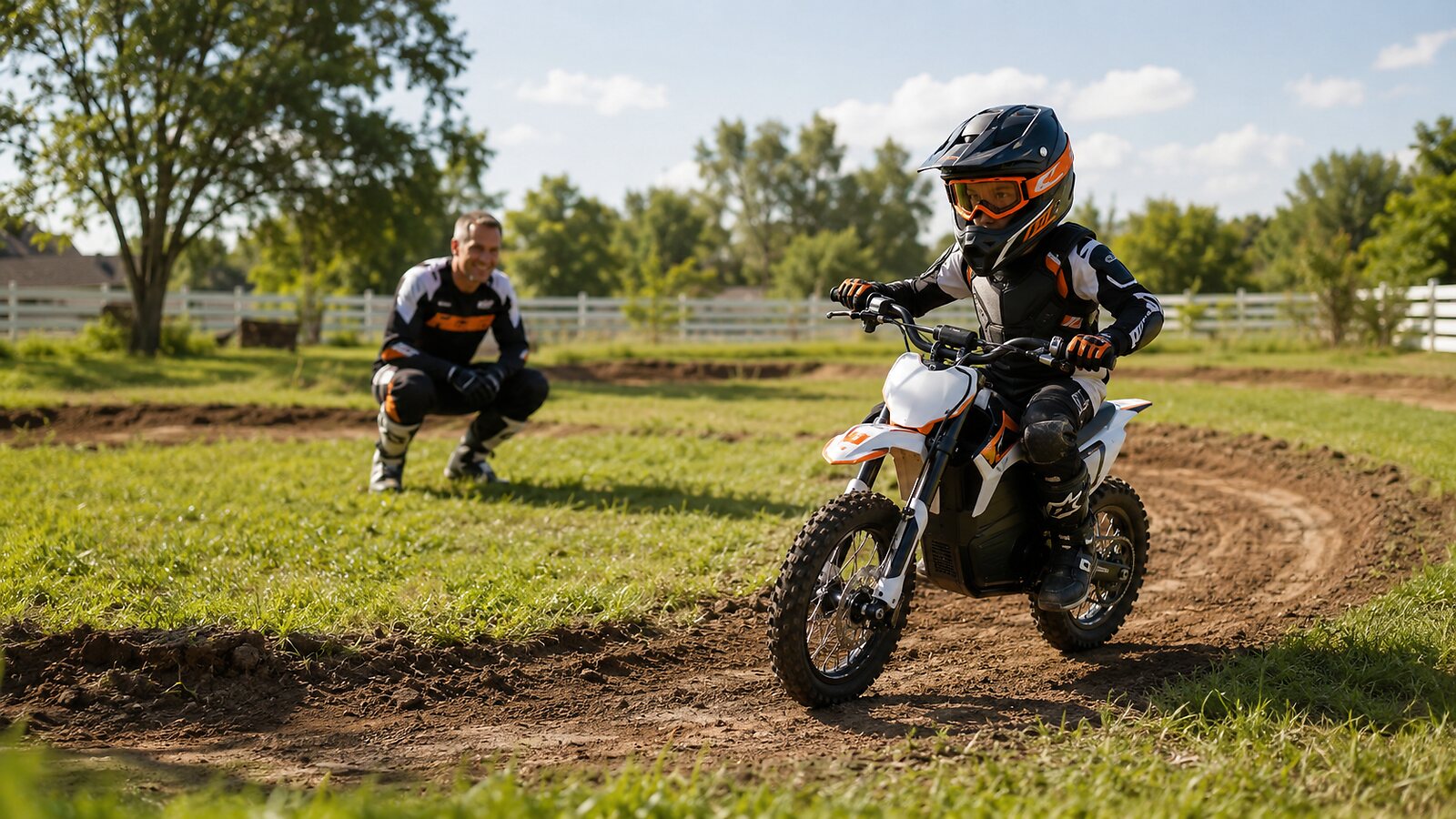
For many families, the backyard is the easiest place for a child to practice a first electric dirt bike. It can be convenient, familiar and easy for a parent to supervise. But a backyard is not automatically a safe riding area. The course needs to be planned around the child, the bike, the surface, nearby hazards, noise and local rules.
1. Check Whether Backyard Riding Is Allowed
Before setting up a course, check local city, county, HOA and neighborhood rules. Property ownership does not necessarily remove noise restrictions or other limits on motorized vehicles. If the property is rented, check the lease as well. A riding area that is legal, permitted and respectful of nearby neighbors is the right starting point.
Electric dirt bikes are generally quieter than gas-powered motorcycles, but they are not silent. Tire noise, repeated acceleration and braking can still affect neighbors. Establish a reasonable riding schedule rather than assuming that an electric bike can be ridden at any hour.
2. Walk the Entire Riding Area
Do a slow inspection before every first session and after major yard changes. Look for garden hoses, wire, toys, branches, rocks, sprinkler heads, holes, exposed roots, drainage channels and loose debris. Move anything that can be removed and clearly identify anything that cannot.
Pay particular attention to fixed objects. Trees, posts, retaining walls, sheds, play equipment and fences should not sit directly beside the riding line. A fenced yard may prevent a child from leaving the property, but a fence can also become a collision hazard if the course runs too close to it.
3. Choose the Right Surface
A flat section of dry, firm ground is usually the best place to begin. Short grass, packed dirt or a clean hard surface can work when the tires have predictable traction. Wet grass and mud are poor starting surfaces because braking and turning become less predictable.
After heavy rain, let the surface dry instead of turning the first lesson into a traction exercise. Deep ruts also make a small bike harder for a beginner to control. If repeated riding creates ruts, change the route or maintain the surface before continuing.
4. Build a Simple Practice Course
A beginner does not need a motocross track. Start with three basic zones:
- Start lane: a short straight section for smooth throttle application.
- Turn zone: a wide, open turn with enough room to reduce speed before entering.
- Stop box: a clearly marked area where the child practices closing the throttle and braking.
Soft cones or similar lightweight markers are useful because they can define the route without becoming hard obstacles. Keep the first course wide and predictable. Avoid jumps, steep drops, narrow paths and tight slalom sections until the child has reliable throttle and brake control.
5. Match the Course to the Bike
The riding area should be designed around the bike's actual size and lowest controllable speed. A small child on a compact electric dirt bike needs less space than a teenager on a larger machine, but the course should still provide plenty of run-off room.
For a K2, begin with the lowest 10 mph mode. The purpose of the first sessions is not to demonstrate the bike's top speed. The child should first learn to start smoothly, roll the throttle closed, brake progressively and maintain a predictable line. Faster settings should come only after these skills are repeatable.
Do not choose a bike simply because it fits inside the yard. Check that the rider can physically control the machine, reach the controls and manage its weight when stopping or leaning.
6. Supervise Actively
Adult supervision means more than being somewhere in the yard. Stand where you can see the complete course and the rider's hands and body position. Keep pets, younger children and spectators outside the riding area.
Agree on one simple emergency command before the bike is switched on, such as “stop.” The child should understand that the command means close the throttle and brake. For beginners, one rider at a time is easier to supervise than multiple bikes moving through the same space.
7. Use the Right Protective Equipment
A backyard does not eliminate the need for protective equipment. A properly fitted helmet should be the starting point, along with gloves, eye protection, long sleeves, long pants, over-the-ankle footwear and appropriate knee and elbow protection. The equipment should fit the child rather than being borrowed in an oversized adult size.
Inspect the bike before each session. Check tire condition and pressure, brake operation, throttle return, fasteners and battery condition according to the manufacturer's instructions. If a control does not feel normal, stop riding until it has been checked.
8. Start With Control Drills, Not Speed
The first backyard session can be very simple. Start with the bike powered off and let the child practice the throttle movement and brake reach. Then use the lowest speed setting for short straight-line runs.
- Start smoothly from a marked line.
- Travel a short distance while looking ahead.
- Roll the throttle completely closed.
- Apply the brake smoothly.
- Stop inside the marked box.
Repeat the drill until the child can do it consistently without adult correction. Then add a wide turn. If the rider becomes tense, looks down, forgets the brake or repeatedly runs wide, return to the previous step.
9. Know When to Stop the Session
Children often lose concentration before parents realize it. Fatigue, frustration, fear or repeated mistakes are good reasons to end the session. A short practice that finishes with controlled riding is more useful than extending the session after the rider becomes distracted.
Also stop when conditions change. Rain, poor visibility, excessive dust, slippery grass or other people entering the course can turn a predictable practice area into a different riding environment.
10. Protect the Backyard, Too
A good riding routine should not destroy the surface or create conflict with the rest of the household. Rotate the route, avoid repeated hard braking in one location and repair ruts when necessary. Keep the bike away from gardens, pools, outdoor furniture and areas where children normally play.
Store and charge the bike according to the manufacturer's instructions in a suitable location. Keep charging equipment away from water, heat and areas where children or pets can trip over cables.
A Simple Backyard Setup Checklist
- Riding is allowed on the property.
- The adult can see the entire course.
- Cars, pets, pedestrians and younger children are separated from the riding line.
- There is clear run-off space beyond the stopping area.
- Fixed hazards are well away from the course.
- The surface is dry and predictable.
- Cones clearly mark starts, turns and stops.
- The rider wears appropriate protective equipment.
- The bike's brakes, throttle, tires and battery are checked before riding.
- The child starts at the lowest controllable speed.
Frequently Asked Questions
Is a large backyard required?
Not necessarily. A smaller yard can work for basic starts, stops and wide turns if the local rules allow riding and there is enough clear space to stop safely. Do not compensate for limited space by riding faster or closer to obstacles.
Can two kids ride together?
Beginners are generally easier to supervise one at a time. Add multiple riders only after each child can maintain a predictable line, follow the stop command and understand right-of-way rules.
Should kids practice on grass or dirt?
Either can work when the surface is dry and predictable. Packed dirt usually provides more consistent feedback for dirt-bike practice, while short grass can be a convenient starting surface. Avoid wet grass and deep mud for early training.
Next Step
The best backyard setup starts with the right-size bike. Compare the Ecoleap K1 and Ecoleap K2, or read our kids' electric dirt bike buyer's guide for help choosing a first bike.
Safety note: Riding rules vary by location and property. Children should ride only in permitted areas under responsible adult supervision and with appropriate protective equipment. Follow the bike manufacturer's manual and local laws. Speed, stopping distance and range vary with rider weight, terrain, weather, riding style and selected mode.


Share:
Kids First Dirt Bike: How to Teach Kids Throttle Control
K2 Before a KTM Dirt Bike: A Step-by-Step Training Path for Young Riders