

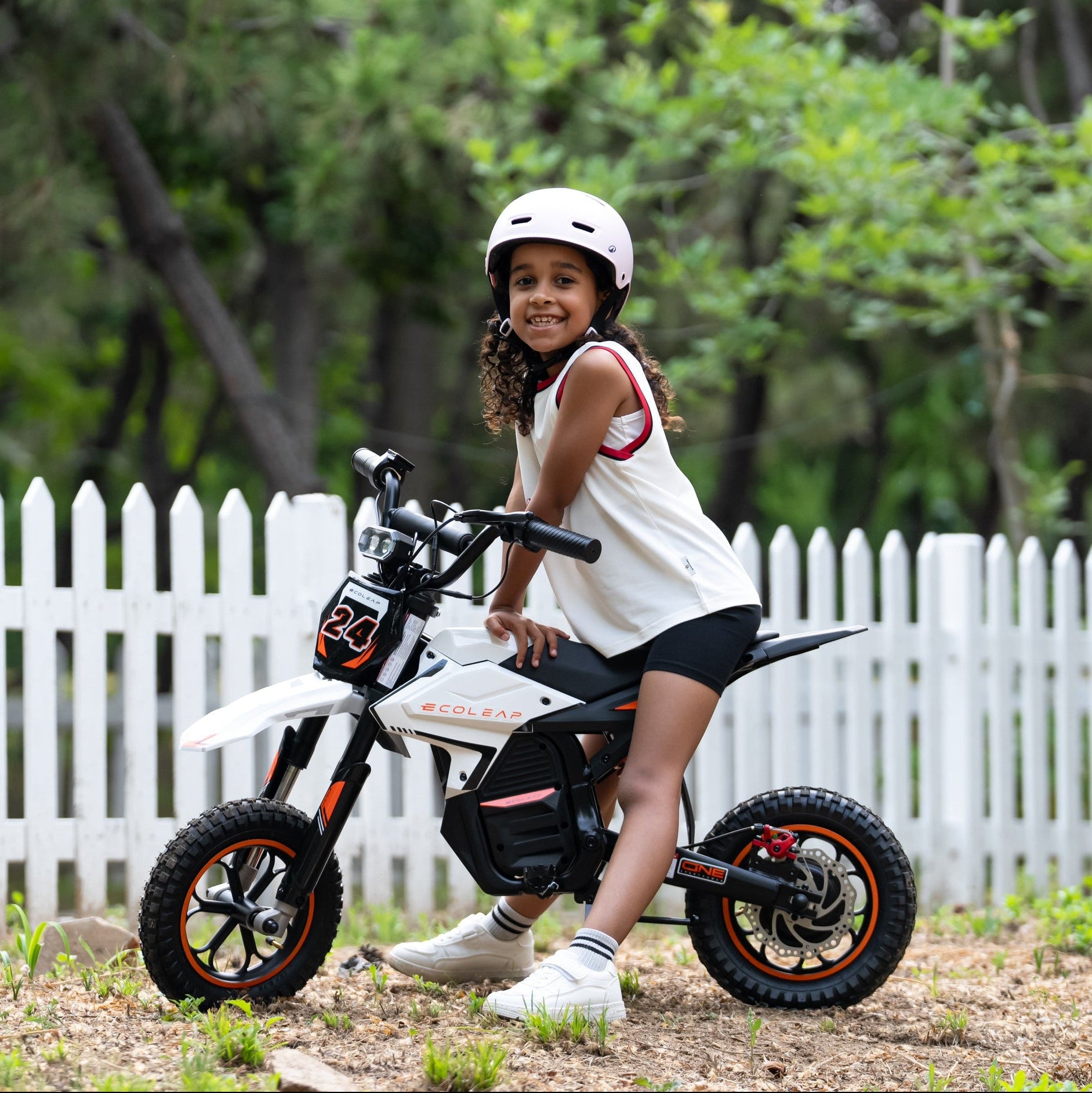
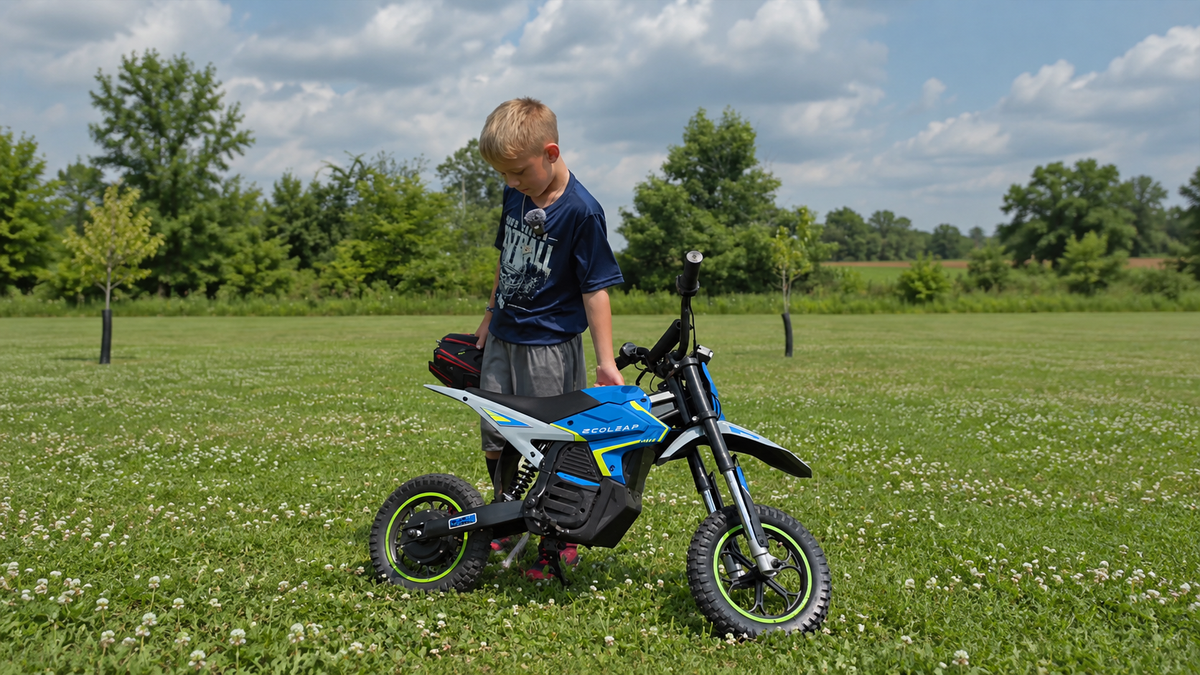
A child who rides an electric dirt bike confidently already has valuable skills: balance, throttle discipline, braking, line choice and respect for a riding area. Moving to gas does not erase that foundation, but it introduces new tasks and sensations. Starting procedures, engine noise, vibration, heat, fuel, idle behavior and possibly gear selection can consume attention that was previously available for steering. The safest transition separates those changes into small lessons instead of expecting the child to adapt to everything during one ride.
Confirm the gas bike actually fits
The next machine may be taller and significantly heavier than the electric bike. Compare seat height, width, curb or wet weight, brake reach, control layout and ground clearance. Have the child wear boots and gear during the fit test. They should support the bike at a normal stop and recover a small lean. Do not treat strong electric-bike performance as proof that a larger gas chassis is physically manageable.
Transfer the skills that remain useful
Looking ahead, using smooth throttle input, braking before a turn, standing lightly over bumps and following adult signals all carry over. Ask the child to explain those habits before discussing the new engine. This reinforces confidence and shows that the transition is an addition, not a restart. If basic stopping and scanning are inconsistent on the electric bike, improve them there before adding gas-specific complexity.
Introduce sound, vibration and heat
Start the gas bike with the child standing beside it at a safe position. Identify the engine, exhaust and other areas that become hot. Let the child hear idle and a small controlled increase in rpm before sitting on the bike. Explain that loud sound does not always equal uncontrollable acceleration, but it can mask spoken instructions. Establish hand signals and an emergency shutdown plan. Never allow contact with the exhaust after riding.
Teach starting and stopping as a routine
Gas models vary: kick start or electric start, choke or enrichment controls, fuel valve, neutral requirements and engine-stop switches. Follow the exact manual. The child should learn the sequence without guessing and know how to shut the engine off immediately. Avoid flooding, repeated aggressive kicking or improvised starting techniques. At the end of a session, the adult should supervise fuel and storage steps.
Add shifting only when necessary
Some beginner gas bikes are fully automatic, while others use foot-shifted gears with an automatic clutch. If the model has gears, practice the shift movement with the engine off and the bike securely supported as allowed by the manual. On the first moving lesson, use one suitable gear in a large open area. Add another only when the child can shift without looking down, drifting off line or forgetting to brake.
Expect different throttle and braking feel
Electric motors can respond immediately from very low speed, while a gas engine’s response changes with rpm, gear and load. Engine braking may also feel different. Drum brakes on small gas bikes may not match the lever feel of discs on the previous electric bike. Use markers to relearn stopping distance at low speed. The child should never assume the new bike will slow or accelerate exactly like the old one.
Teach fuel and maintenance boundaries
Adults should handle gasoline, oil checks and most maintenance. Store fuel only in approved containers away from ignition sources and living areas, and follow local rules. Explain that the child must report leaks, unusual smoke, changing engine sound or difficulty shifting rather than continuing. The parent should learn air-filter, oil, chain or shaft-drive and storage requirements before the bike enters regular use.
Fit and readiness come before the category
A product label cannot determine whether a machine fits a particular child. Measure inseam in riding boots, check reach to the handlebar and both brake controls, and confirm that the rider can support the bike during a normal stop. Compare vehicle weight as carefully as seat height. A low seat can help, but a machine that is too heavy to recover from a lean may still undermine confidence. Age ranges should be treated as broad starting points only.
Readiness also includes behavior. The child should stop immediately when an adult signals, scan ahead rather than stare at the front wheel, and accept a decision to end the ride. Consistent judgment in a low mode is more important than occasional success at higher speed. Parents should choose the machine that supports present learning, not one selected mainly around the hope that the child will grow into it.
Inspect the complete ownership package
Look beyond the purchase price. Confirm warranty coverage, replacement parts, battery or engine service needs, shipping or assembly requirements and access to qualified help. Inspect tires, brakes, throttle, steering, controls, frame, suspension, final drive and all safety guards. For a used machine, documentation and condition matter more than cosmetic shine. For a new machine, dealer preparation or careful assembly still needs verification before the first ride.
Plan where the bike will be ridden and stored. Off-road access rules vary, and neither an electric nor a small gas dirt bike is automatically street legal. A family needs a permitted practice area, transport method, secure dry storage, protective equipment and time for maintenance. A bike that cannot be used legally or conveniently may deliver less value than a simpler model that fits the family’s real routine.
Use a staged first-ride plan
Start on flat, open private property with a properly fitted certified helmet, eye protection, gloves, long sleeves, long pants, knee and elbow protection and over-the-ankle boots. Practice the controls with the machine off. Then complete smooth starts, stops at a marker and wide turns at the lowest suitable performance setting. Introduce only one new variable—more speed, rougher terrain or a slope—at a time.
Keep sessions short and end before fatigue changes posture or decision-making. After riding, ask what felt easy, difficult and surprising. Inspect the machine again for loose fasteners, fluid leaks, drivetrain changes or damage. A simple riding log helps parents separate a one-time mistake from a repeated fit, control or maintenance problem.
Frequently asked questions
How long should the transition take?
There is no fixed timeline. Some riders adapt in several calm sessions; others need weeks. Progress depends on fit, control and judgment, not urgency.
Should the electric bike be kept?
Keeping it temporarily can help the child practice core skills without the added gas-bike workload. Avoid switching repeatedly within one session if the controls cause confusion.
Is a geared bike necessary right away?
No. A fully automatic first gas bike can let the child learn noise, heat, fuel and engine behavior before adding shifting.
What is the biggest new safety concern?
Hot engine and exhaust parts, fuel handling and more complex starting or shutdown procedures are major differences. Teach them explicitly before riding.
A four-session transition example
Session one is orientation: controls, hot areas, starting and shutdown with little or no riding. Session two uses one familiar flat loop for low-speed starts and stops. Session three adds turns and, if applicable, one gear change practiced repeatedly without looking down. Session four introduces a mild terrain change while preserving the same conservative pace. Repeat any session until the child remains relaxed and consistent.
Parents should not schedule the progression around a weekend deadline or group ride. If noise causes tension, the child forgets the shutdown sequence or braking becomes inconsistent, return to the previous step. A slower transition protects confidence and prevents new controls from weakening skills that were already strong on the electric bike.
What adults need to learn first
The supervising adult should be able to start, stop, move and inspect the gas bike, explain the fuel valve or choke when fitted, identify neutral and operate the kill switch. They should understand the oil, air-filter, drivetrain and storage schedule in the manual. A child cannot be taught a reliable routine by an adult who is still guessing at the controls.
Final recommendation
A successful transition preserves the confidence earned on the electric bike while adding one gas-specific responsibility at a time. Begin with fit, transfer existing control skills, teach heat and shutdown, then introduce starts, stops and shifting. Moving slowly through the process is not holding the child back; it is how the rider becomes genuinely independent rather than merely capable of making the bike move.
Families building a step-by-step training path can review the Ecoleap K2 kids electric dirt bike and our guide to deciding when a child is ready to move up to a PW50.
Safety note: Follow the manufacturer’s manual and local rules. Children should ride only in permitted off-road areas with complete protective gear and responsible adult supervision.


Share:
Kids’ Electric Dirt Bike Warranty and Spare Parts: What Parents Should Check Before Buying
PW50 vs. CRF50F: Which Gas Dirt Bike Should Kids Move Up To?