

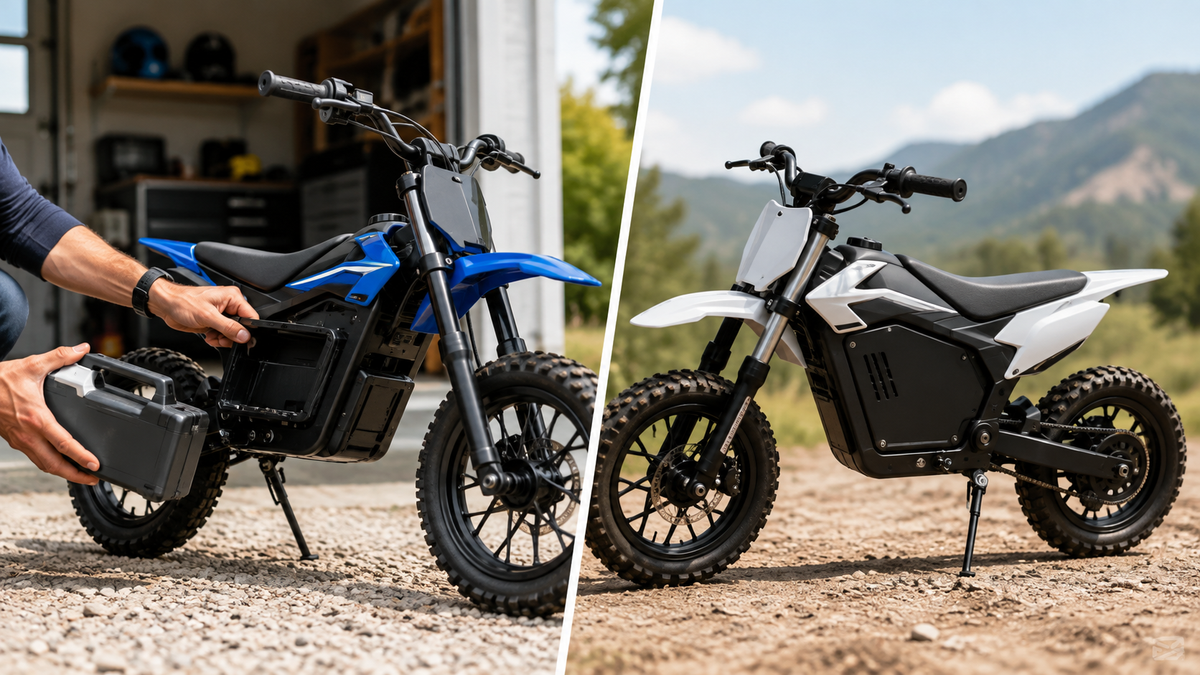
The Yamaha PW50 and Honda CRF50F are both established small gas dirt bikes, but they serve different points in a child’s progression. The PW50 is lower, lighter and fully automatic, while the CRF50F is taller, heavier and introduces three foot-shifted gears through an automatic clutch. A child moving from an electric balance bike or youth electric dirt bike may fit one physically while being better prepared mentally for the other. Parents should compare control demands and weight, not only the shared “50” in the model names.
Size and weight create the first difference
Yamaha lists the current PW50 with an 18.7-inch seat height and 90-pound wet weight. Honda lists the CRF50F with a 21.6-inch seat and 111-pound curb weight. The three-inch seat difference is meaningful for a child with a short inseam, and the additional 21 pounds can be noticeable during stops, tip-overs and loading. Published weight definitions are not identical, but both include operating fluids. The child should sit on the exact bike in riding boots before a decision.
PW50: fewer controls to process
The PW50 uses a 49cc air-cooled two-stroke engine with oil injection, a fully automatic single-speed transmission and shaft final drive. The rider can focus on throttle, steering and braking without selecting gears or operating a clutch. Yamaha also provides an adjustable throttle stop screw for adult control. The low seat and simple operation make it attractive as a first gas machine, though parents still need to teach engine starting, hot parts, fuel handling and drum-brake feel.
CRF50F: a step toward geared motorcycles
The CRF50F uses a 49cc air-cooled four-stroke engine and a three-speed transmission with an automatic clutch. There is no manual clutch lever to coordinate, but the child selects gears with a foot shifter. Honda specifies chain final drive, 6.0 inches of ground clearance and longer suspension travel than the PW50. This makes the CRF more trail-bike-like, while also adding maintenance and decision-making. The rider must learn when and how to shift without losing steering attention.
Two-stroke versus four-stroke ownership
The PW50’s oil-injection system removes the need to premix fuel manually, but owners must keep the correct oil supply filled and maintain the system according to Yamaha instructions. The CRF50F four-stroke uses engine oil and valve-train maintenance practices typical of small four-strokes. Neither is maintenance-free. Fuel can degrade during storage, carburetors can require attention and both machines have hot engine and exhaust components that electric-bike riders have not previously managed.
Shaft drive versus chain drive
The PW50’s shaft final drive avoids chain lubrication and adjustment, supporting its beginner-friendly ownership design. The CRF50F’s chain drive is conventional, serviceable and familiar for future motorcycles, but needs cleaning, lubrication and slack inspection. Keep all guards installed and the engine off during inspection. Families transitioning from a chain-driven electric dirt bike may already understand the routine, but gas-bike manuals specify their own procedures.
Which skills should be established first
Before moving to either gas model, the child should start and stop smoothly, maintain a line, look through turns, brake on command and recover from small surprises. For the CRF50F, add the ability to understand gear choice and operate a foot shifter without staring down. Noise can change confidence and communication, so introduce the running engine gradually. Practice away from crowds in a permitted area with a clear shutdown signal.
Fit and readiness come before the category
A product label cannot determine whether a machine fits a particular child. Measure inseam in riding boots, check reach to the handlebar and both brake controls, and confirm that the rider can support the bike during a normal stop. Compare vehicle weight as carefully as seat height. A low seat can help, but a machine that is too heavy to recover from a lean may still undermine confidence. Age ranges should be treated as broad starting points only.
Readiness also includes behavior. The child should stop immediately when an adult signals, scan ahead rather than stare at the front wheel, and accept a decision to end the ride. Consistent judgment in a low mode is more important than occasional success at higher speed. Parents should choose the machine that supports present learning, not one selected mainly around the hope that the child will grow into it.
Inspect the complete ownership package
Look beyond the purchase price. Confirm warranty coverage, replacement parts, battery or engine service needs, shipping or assembly requirements and access to qualified help. Inspect tires, brakes, throttle, steering, controls, frame, suspension, final drive and all safety guards. For a used machine, documentation and condition matter more than cosmetic shine. For a new machine, dealer preparation or careful assembly still needs verification before the first ride.
Plan where the bike will be ridden and stored. Off-road access rules vary, and neither an electric nor a small gas dirt bike is automatically street legal. A family needs a permitted practice area, transport method, secure dry storage, protective equipment and time for maintenance. A bike that cannot be used legally or conveniently may deliver less value than a simpler model that fits the family’s real routine.
Use a staged first-ride plan
Start on flat, open private property with a properly fitted certified helmet, eye protection, gloves, long sleeves, long pants, knee and elbow protection and over-the-ankle boots. Practice the controls with the machine off. Then complete smooth starts, stops at a marker and wide turns at the lowest suitable performance setting. Introduce only one new variable—more speed, rougher terrain or a slope—at a time.
Keep sessions short and end before fatigue changes posture or decision-making. After riding, ask what felt easy, difficult and surprising. Inspect the machine again for loose fasteners, fluid leaks, drivetrain changes or damage. A simple riding log helps parents separate a one-time mistake from a repeated fit, control or maintenance problem.
Frequently asked questions
Is the CRF50F faster than the PW50?
Performance depends on conditions, but the CRF50F’s geared four-stroke design generally provides a broader next-stage experience. Parents should not choose by top speed alone.
Does either bike have a manual clutch?
No. The PW50 is fully automatic and single-speed. The CRF50F has three gears with an automatic clutch, so the rider shifts without a clutch lever.
Which bike is easier for a short child?
The PW50’s official 18.7-inch seat is substantially lower than the CRF50F’s 21.6-inch seat, but the child should test actual fit in boots.
Can a child move directly from an electric bike?
Yes when fit, braking, throttle control and judgment are reliable. Gas-specific lessons on starting, fuel, hot components and shutdown are still required.
Official specification snapshot
For the current U.S. models checked in this guide, Yamaha lists the PW50 with an 18.7-inch seat, 90-pound wet weight, 2.4 inches of front travel, 2.0 inches of rear travel, drum brakes and 10-inch tires. Honda lists the CRF50F with a 21.6-inch seat, 111-pound curb weight, 3.8 inches of front travel, 2.8 inches of rear travel, drum brakes and 10-inch tires. Model-year specifications and pricing can change, so parents should verify the exact unit before buying.
The comparison shows why the models should not be treated as interchangeable. The PW50 prioritizes very low fit and simplified controls. The CRF50F provides additional clearance, suspension movement and three gears, but asks the child to manage more weight and complexity. A physically taller rider is not automatically ready to shift, and an experienced rider may still need the lower PW50 if inseam is limited.
What a supervised fit test should include
Have the child mount and dismount, reach each control, place feet down, operate the foot shifter on the CRF50F and hold the bike while an adult gently introduces a small lean. Start the engine only after the rider understands the kill switch and hot areas. The correct choice should feel calm before it ever moves.
Final recommendation
Choose the PW50 when the child needs the lowest seat, lighter weight and simplest possible gas controls. Choose the CRF50F when the rider fits its taller, heavier chassis and is ready to add foot shifting and a more conventional trail-bike layout. Neither choice should be based on age or brand loyalty alone. The correct bike is the one the child can physically control and mentally operate without rushing.
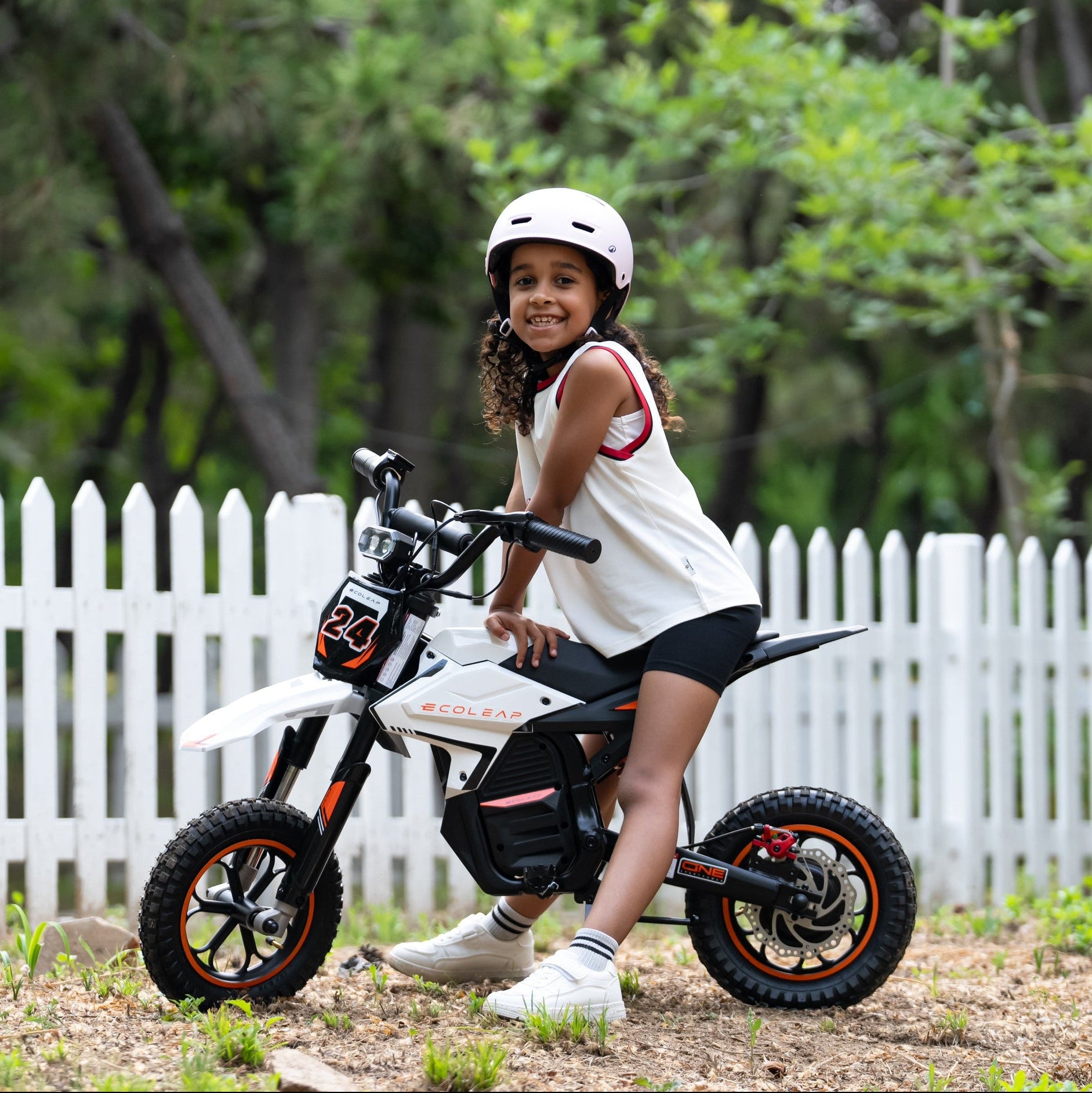
Families building a step-by-step training path can review the Ecoleap K2 kids electric dirt bike and our guide to deciding when a child is ready to move up to a PW50.
Safety note: Follow the manufacturer’s manual and local rules. Children should ride only in permitted off-road areas with complete protective gear and responsible adult supervision.


Share:
How to Transition From an Electric Dirt Bike to a Gas Dirt Bike
Electric Dirt Bike Motor Gets Hot: When Should Parents Be Concerned?