

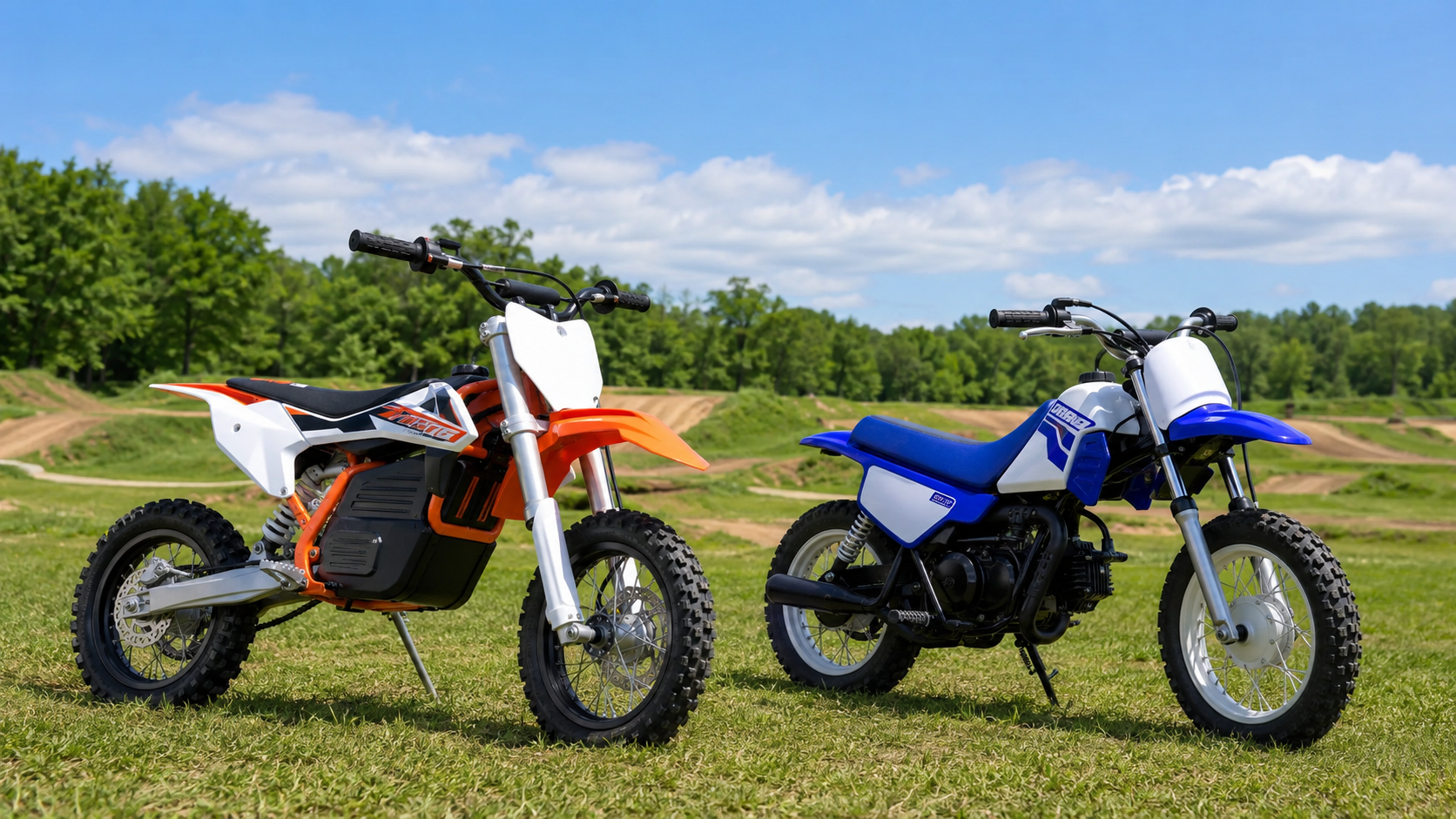
The KTM SX-E 2 and Yamaha PW50 target young riders through different systems. The KTM is an electric mini-crosser with adjustable ergonomics and selectable modes. The Yamaha is a proven 49cc gas motorcycle with an automatic transmission, throttle limiter and shaft drive.
Quick comparison
| Feature | KTM SX-E 2 | Yamaha PW50 |
|---|---|---|
| Power | Electric hub motor | 49cc two-stroke |
| Seat height | About 18.5 in; adjustable to about 19.6 in | 18.7 in |
| Control | Selectable ride modes | Throttle stop screw |
| Starting | Electric activation | Kick start |
| Noise | Relatively quiet | Gas-engine sound |
| Energy | Charging | Fast refueling |
| Maintenance | No gas or carburetor | Fuel and engine service |
Specifications vary by model year and country; confirm the exact bike.
Fit: similar seat height, different feel
The seat numbers are close, but weight distribution, reach and how easily a child catches a lean differ. Test both in riding boots. The rider should reach the brake, turn freely and stabilize the motorcycle without constant adult support.
Power delivery and parental control
The SX-E 2 limits performance through modes; the PW50 restricts throttle opening with a stop screw. Both still require teaching release, brake, feet down. A control limits power but cannot supply judgment.
What electric changes
Electric power removes kick-starting, fuel and warm-up routines from early practice. Lower noise can support frequent short sessions where riding is legal. The tradeoff is charging and battery care. A discharged bike cannot be refueled in seconds.
What the PW50 teaches
The PW50 introduces sound, vibration, starting and gas-bike routines. Automatic transmission removes manual shifting; shaft drive avoids chain maintenance; Autolube avoids routine fuel/oil premixing. Families interested in conventional motocross may value this pathway.
Terrain and chassis
The SX-E 2 is a premium electric mini-crosser with motorcycle-style components. The PW50 uses modest suspension travel and drum brakes suited to its beginner role. Choose for actual terrain—flat practice, packed dirt and controlled obstacles are different from deep sand or racing.
Maintenance
| Task | SX-E 2 | PW50 |
|---|---|---|
| Fuel system | None | Fuel/carburetor/storage care |
| Charging | Required | Not for propulsion |
| Air filter/spark plug | No gas-engine items | Routine service |
| Drive | Hub motor | Shaft final drive |
| Both | Brakes, tires, fasteners and suspension checks | |
Choose the SX-E 2 when
- The rider fits and balances well.
- Quiet practice matters.
- Parents want staged electric modes.
- The family accepts premium price and charging.
- Local riding supports an electric mini-crosser.
Choose the PW50 when
- The family wants a gas-bike pathway.
- The rider can manage the 90-pound wet weight.
- Quick refueling matters.
- An adult can maintain a two-stroke.
- Local programs support PW50 riding.
What if both are too much?
A quiet electric bike may help a nervous rider, but the KTM remains a real motorcycle. If the child cannot confidently stabilize either, consider a smaller platform such as the Ecoleap K1 or continue bicycle practice.
Bottom line
The SX-E 2 offers refined electric control and adjustable fit; the PW50 offers a familiar gas-bike pathway and very low seat. Choose what the child can master today. Also read our Husqvarna EE 2 vs PW50 and PW50 vs electric guide.


Share:
Kids Dirt Bike Age Guide: What Parents Should Know
How Long Does a Razor Dirt Bike Battery Last? Charging and Ride-Time Guide