

Riding a Razor dirt bike can give a child valuable two-wheel experience before a Yamaha PW50, but the transition is not automatic. Balance, vision and basic braking transfer. Throttle feel, machine weight and the operating routine may need to be relearned.
Skills that usually transfer
- Looking ahead instead of at the front tire.
- Keeping feet on the pegs once moving.
- Using body position to turn and absorb small bumps.
- Closing the throttle before braking.
- Choosing a line around holes, roots and cones.
- Stopping at a visible marker on command.
What may feel different on a PW50
Electric mini bikes deliver power without engine noise, warm-up or fuel. A PW50 introduces a gas-bike sound and vibration profile and a different response at the grip. The rider also has to learn the correct starting, stopping and adult-supervised pre-ride routine. Do not demonstrate every new control while the engine is running; teach the layout first with the bike off.
Watch for an on/off throttle habit
Some owners describe older budget electric mini bikes as having a response that feels closer to on/off than finely progressive. That is user experience, not a laboratory comparison, but it identifies a useful training issue. A child who repeatedly snaps the grip fully open can carry that habit to a more responsive machine.
Before upgrading, ask the rider to complete slow starts, hold a steady middle pace and roll off before a braking marker. If speed repeatedly oscillates between coasting and full power, spend more time on throttle drills.
Where K2 can help
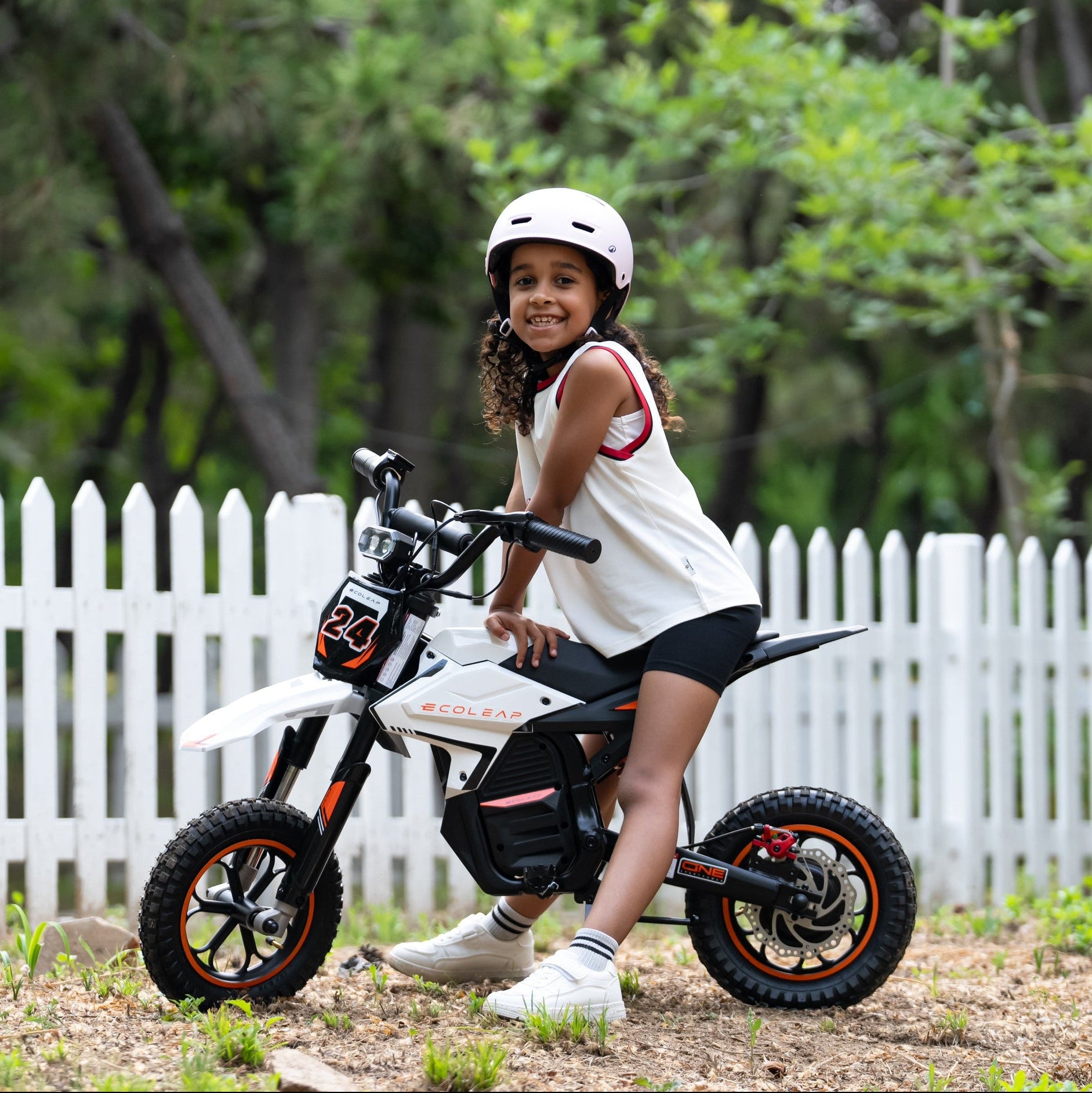
Ecoleap K2 offers an alternative bridge for a rider who has outgrown a Razor but is not ready for a gas bike. Its brushless motor, lithium battery and 10/15/20 mph modes provide more room to practice progressive control. Front and rear suspension, wider 12 × 2.75-inch tires and foot pegs also make the skills closer to dirt-bike riding than flat-yard cruising.
PW50 transition checklist
| Skill | Ready signal | Needs more work |
|---|---|---|
| Throttle | Smooth launch and steady partial throttle | Repeated grab-and-go starts |
| Braking | Rolls off first and stops inside a box | Drags feet or overshoots |
| Balance | Turns both directions with feet up | Paddles through corners |
| Strength | Controls destination bike while off | Needs adult to hold it |
| Judgment | Slows before hazards | Waits for adult rescue |
First-day plan
- Walk around the PW50 and identify hot, moving and control areas.
- Practice mounting, dismounting and brake reach with the engine off.
- Use a flat, open area and one straight lane.
- Make the first runs short enough that the child stops before fatigue.
- Add wide turns only after starts and stops are calm.
Safety still depends on fit, terrain and supervision
No speed mode or motor type makes a youth dirt bike automatically safe. Use a properly fitted certified full-face helmet, goggles, gloves, long sleeves, long pants, knee and elbow protection and over-the-ankle boots. Ride only on private property or permitted off-road areas, away from traffic, water, drop-offs and bystanders. An adult should inspect the brakes, tires, controls, fasteners and riding area before each session.
Final answer
A Razor dirt bike can build a useful foundation, but a child should not move to a PW50 merely because they can ride the Razor at full speed. Upgrade when throttle, braking, balance, strength and judgment remain consistent at low speed—where most beginner mistakes occur.
Model specifications, prices and recommendations can change. Confirm the current manufacturer product page and owner’s manual before buying. Community comments cited here are individual parent experiences, not controlled product tests.
Turn the comparison into a training decision
Moving between youth bikes is not simply an increase in speed. Each platform teaches some habits well and leaves other habits for the next stage. Parents should identify what transfers, what changes and what the child has not yet practiced. This prevents experience on one machine from being mistaken for complete readiness on another.
Evaluate the rider in a controlled area with repeatable drills: independent mounting, smooth launch, two-way turns, throttle release, accurate stopping and recovery after a small error. Look at performance across several sessions. One good lap can reflect excitement or luck; consistent behavior shows a skill that is ready to travel to the next bike.
Balance transfers better than throttle feel
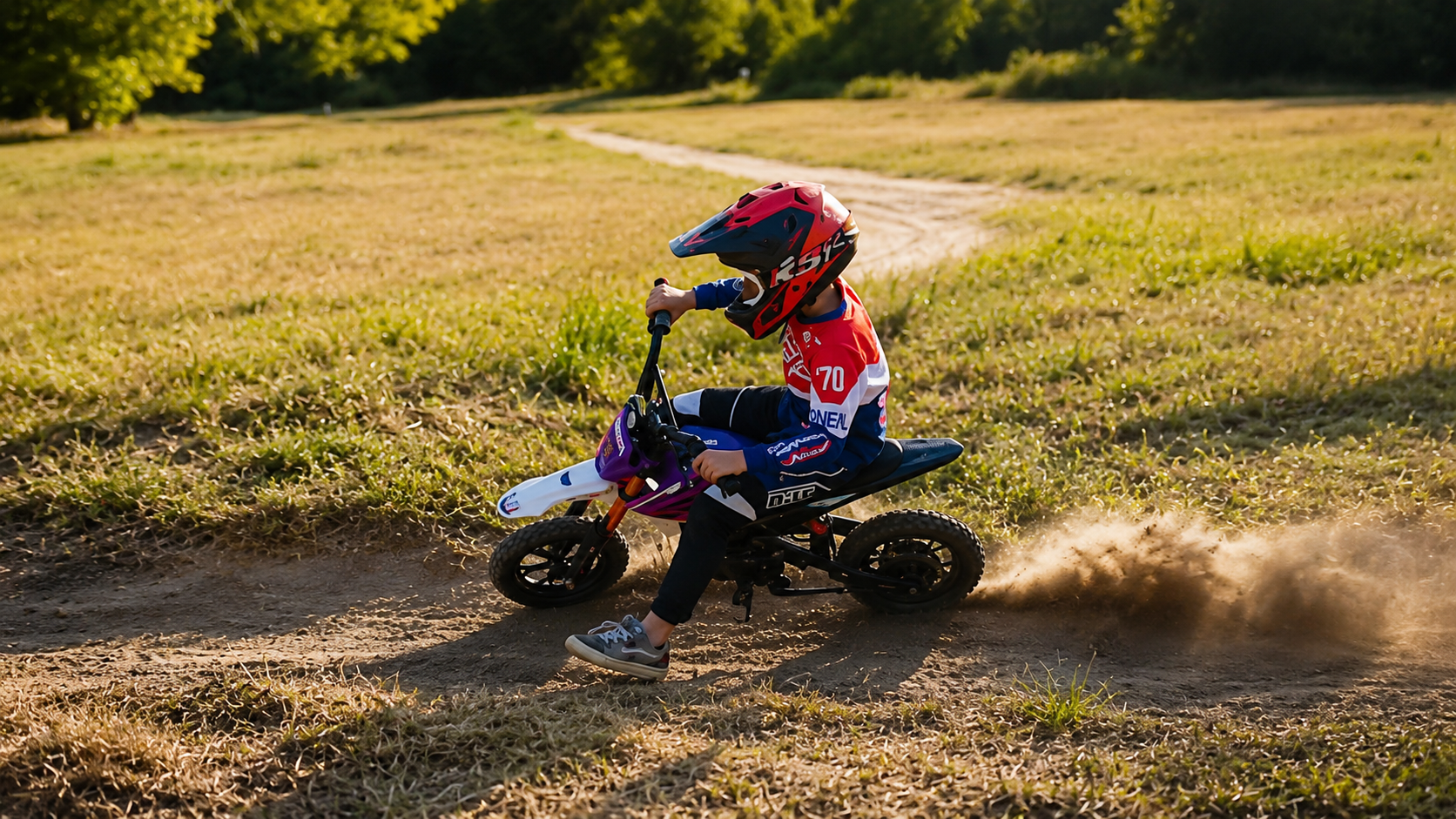
Time on a Razor dirt bike can teach two-wheel tracking, looking through turns and remaining relaxed over uneven ground. Throttle response varies by model and condition, so the child must treat the Yamaha PW50 control as new rather than assuming the same wrist movement will produce the same result.
Braking habits need a fresh check
Razor models use different brake layouts and lever feel across the range. PW50 controls, weight transfer and stopping response should be introduced from zero. Teach throttle off first, then progressive braking in a large stop box before combining braking with turns.
Motorcycle weight appears at low speed
A child may look comfortable on a Razor while moving yet struggle with a heavier or differently balanced bike during mounting and stops. Have the rider walk the PW50 with the engine off, make tight turns and recover a small lean before the first start.
Foot placement may need to be relearned
Some riders develop a habit of dragging feet or leaving them wide after launch. Practice returning both feet to the pegs as soon as balance is established. On uneven ground, loose feet can catch or prevent the body from moving with the bike.
Noise and starting routine are new demands
An electric Razor starts quietly with a switch and throttle. A gasoline bike introduces sound, vibration, starting procedure, fuel routine and warm-up behavior. Present these elements separately so sensory excitement does not crowd out the riding lesson.
Straight-line speed is weak evidence
A rider who holds full throttle down a driveway has shown confidence, not necessarily judgment. Require figure eights, voluntary slowing, planned stops, obstacle avoidance and immediate response to an adult signal before discussing PW50 readiness.
Correct poor on-off throttle habits
Parent discussions sometimes describe abrupt stock response on certain Razor models. Do not assume every unit behaves identically, but watch for a learned full-on/full-off wrist pattern. Use slow roll-on drills and reward smoothness rather than acceleration.
K2 can fill the skills gap
If the child has outgrown a basic Razor experience but is not ready for the full change to PW50, K2 can add 10/15/20 mph staged practice, foot-peg posture, suspension, wider dirt tires and a rear disc brake on an electric platform.
The PW50 should still be taught as a new bike
Even a highly experienced electric rider deserves a power-off orientation, control identification and restricted first session. Familiarity reduces some learning load; it does not eliminate the need to respect a different machine.
Four-session transition plan
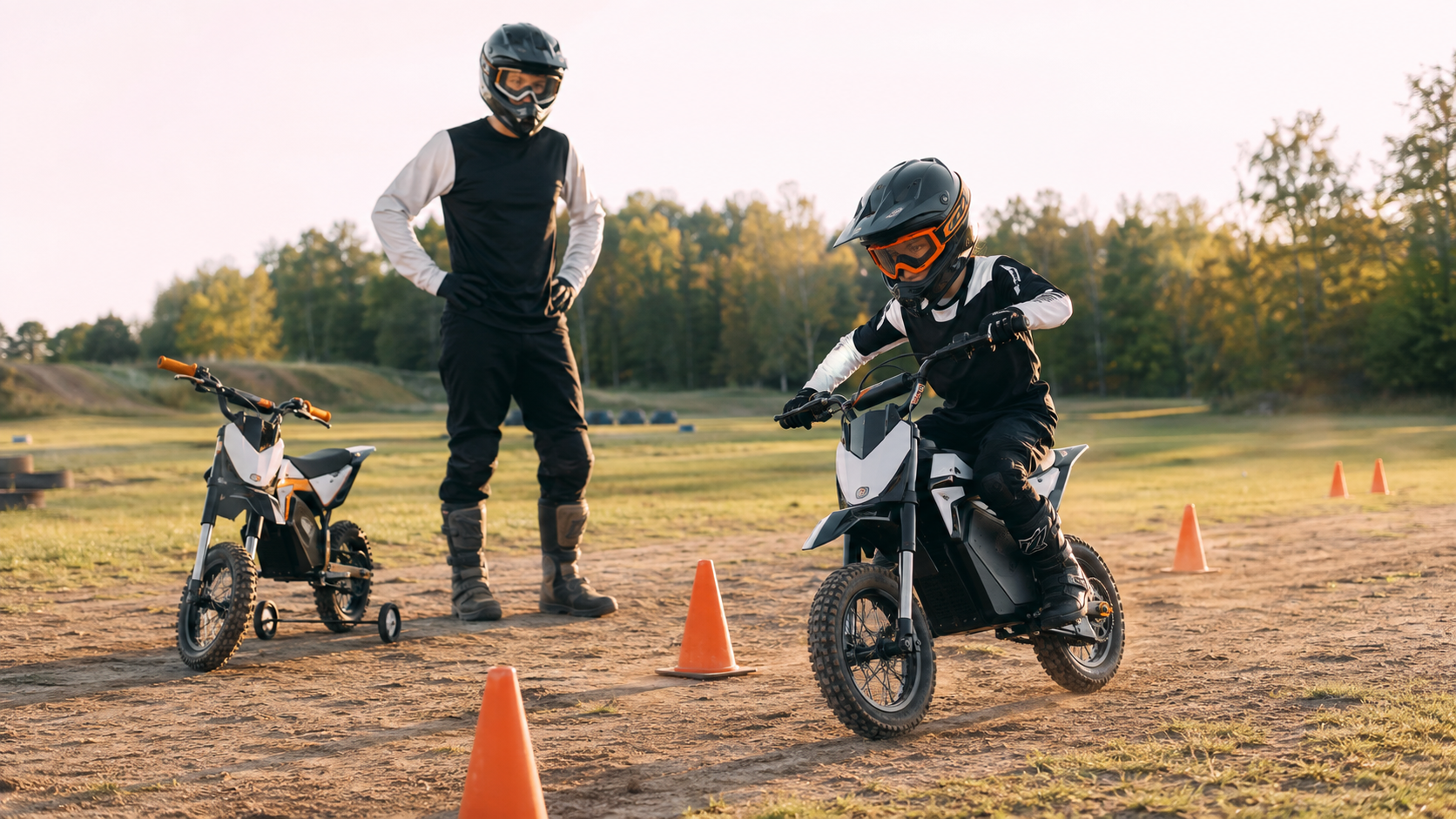
Session one is entirely power-off: controls, mounting, walking and braking. Session two uses short straight launches and a generous stop box. Session three adds wide circles and figure eights. Session four introduces mild dirt only if the previous skills remain calm. Return to an earlier session whenever the new throttle or chassis causes rushed movement.
Keep the first sessions deliberately easy. The child should finish wanting another ride, not exhausted by a machine that asks for too many new decisions. Change only one factor at a time—bike, speed setting, surface or obstacle—so the source of any difficulty remains clear.
Frequently asked questions
Does riding a Razor mean a child is ready for a Yamaha PW50?
Not automatically. It provides relevant experience, but fit, weight management, smooth throttle control, brake reach and behavioral judgment must be checked on the PW50 itself.
Which Razor skills are most valuable?
Two-wheel balance, eyes-up steering, confidence on dirt and following adult boundaries transfer well. Exact throttle and brake feel do not transfer perfectly.
When should parents consider K2 between them?
When the child needs motorcycle-style pegs, staged speed, suspension and more structured dirt practice but would benefit from retaining simple electric operation.
Readiness checklist
- Physical fit is confirmed with power off.
- The child can control the minimum powered setting.
- Throttle release and braking are deliberate, not panicked.
- Feet return to the pegs without repeated reminders.
- The rider slows before a problem rather than after it.
- The family has legal terrain, correct protective gear and active adult supervision.
If the rider misses a check, train that behavior on the current platform or choose an intermediate bike. The purpose of progression is to preserve confidence while adding one manageable demand at a time.
What to record after the first PW50 session
Write down where the child released the throttle, how accurately the bike stopped, whether both feet returned to the pegs and which new control caused hesitation. A short written record is more useful than memory when deciding whether the next session should repeat the same drill or add terrain.
Also inspect technique from both sides of the course. A child may hide a weak turn direction by choosing the comfortable line repeatedly. Equal control to the left and right is especially important before the different weight and response of a PW50 are added.
Share:
Why K2 Works as a Pre-PW50 Training Bike
Can a Child Go Straight From a STACYC to a Yamaha PW50 or KTM Dirt Bike?