

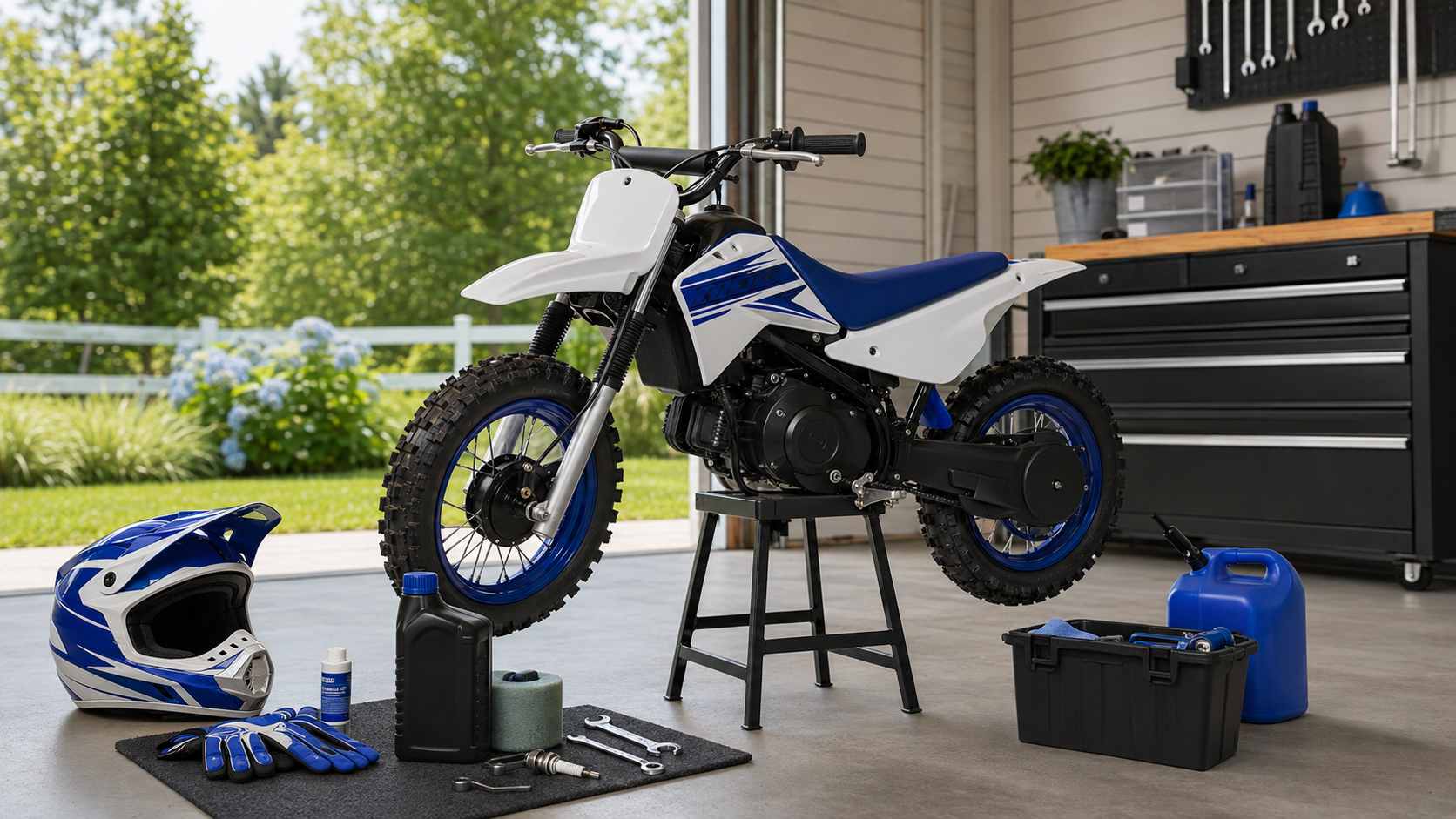
The number on a Yamaha PW50 listing is only the beginning of the ownership budget. Parents also need to account for dealer charges, protective gear, transportation, routine service, riding-area fees and the possibility that a child quickly outgrows the motorcycle.
The complete PW50 budget
| Cost | When | Main variables |
|---|---|---|
| Motorcycle | Purchase | New/used, model year, supply |
| Dealer and tax fees | Purchase | State and dealer |
| Protective gear | Before first ride | Fit, certification, child growth |
| Fuel and oil | Ongoing | Ride frequency and storage |
| Maintenance | Scheduled | Hours, dust and labor |
| Transport | Per trip/upfront | Trailer, carrier and distance |
| Repairs | As needed | Falls, wear and used-bike condition |
Out-the-door price beats the advertised price
Ask for a written quote itemizing MSRP, destination, setup, documentation, sales tax and registration-related charges. Compare the cash out-the-door total before choosing financing or accessories.
Gear belongs in the purchase budget
Before the first ride, plan for a properly fitted motorcycle helmet, eye protection, gloves, over-the-ankle boots, long sleeves, long pants and age-appropriate body protection. Children grow quickly, so some gear is a recurring cost.
Fuel, oil and storage
The PW50 uses Yamaha's Autolube oil-injection system, so routine fuel/oil premixing is not required. Parents still need correct fuel, specified two-stroke oil and safe containers. Old fuel can cause starting and carburetor problems, so follow the model-year manual for storage.
Its shaft final drive avoids chain adjustment and lubrication. That is a real maintenance advantage, not a promise of zero maintenance.
Routine maintenance
- Air-filter inspection and service
- Spark-plug checks
- Brake adjustment
- Tire pressure and tube repairs
- Control cable inspection
- Fastener checks
- Fuel-system service after poor storage
- Professional labor when needed
The hidden expense: a legal place to ride
A PW50 is not a street or sidewalk toy. Many families need a truck, trailer or carrier, tie-downs and access to a legal off-road area. Before buying, identify a realistic location and confirm its age, sound, registration and supervision rules.
Used PW50: lower price, more inspection risk
Check cold starting, idle, throttle return, brakes, steering bearings, fork leaks, wheels, tires, frame damage and service history. Confirm the identification and ownership documents. Even a “ready to ride” bike deserves baseline service.
Think in total ownership cost
Total cost equals purchase and operating expenses minus resale proceeds. PW50s can retain value when maintained well, but resale is not guaranteed. Keep receipts and avoid poorly documented modifications.
PW50 versus electric ownership
| Expense | PW50 | Electric kids bike |
|---|---|---|
| Energy | Gasoline and two-stroke oil | Household electricity |
| Engine service | Fuel/ignition/engine care | No gas engine or carburetor |
| Major future item | Engine and wear repairs | Traction battery replacement |
| Practice | Noise may limit nearby use | Quieter where riding is legal |
An electric bike is not automatically cheaper. Battery quality, replacement availability, charger support, brakes and chassis all matter. Compare a complete product such as the Ecoleap K1 or larger K2, not battery chemistry alone.
Questions before paying
- What is the exact out-the-door price?
- Which fees are optional?
- What warranty applies?
- Where will the child legally ride?
- Can the family transport the bike?
- What annual service is realistic?
- Does the child fit the bike now?
Read our PW50 size guide before treating any listing as a bargain. A cheap motorcycle is expensive if it does not fit or rarely leaves the garage.
Share:
STACYC 12eDRIVE vs Ecoleap K2: Is Your Child Ready to Upgrade?
Choosing a Kids’ Dirt Bike by Height